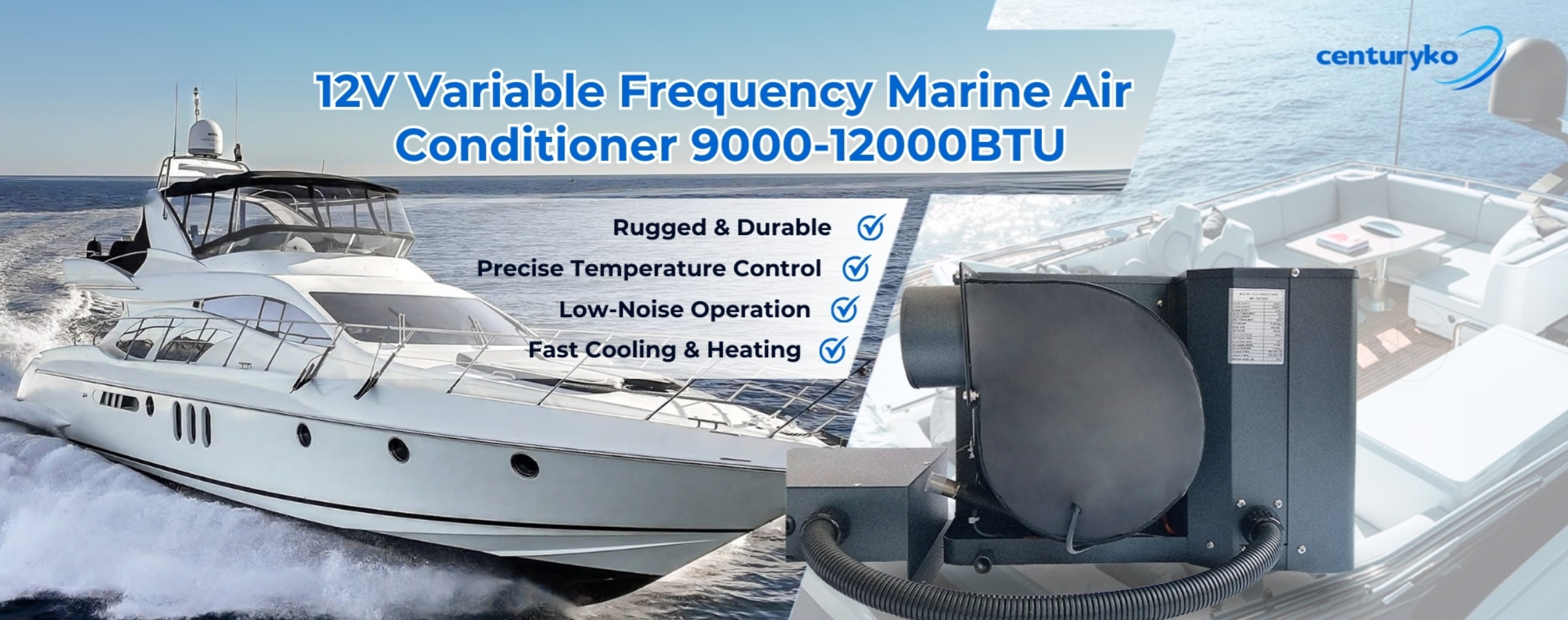
Problem: Uneven comfort and hidden energy waste on boats
The heart of the problem is simple and tactile: cabins that stay muggy while other zones freeze, compressors cycling loudly at night, and panels that don’t respond when sea motion shifts heat pockets. Operators and owners increasingly choose marine air conditioning units to solve that, but standard systems treat the vessel like a single room. The result is wasted power, stress on components, and unhappy guests who notice every change in temperature and scent of stale air. A smart approach must talk to zones separately and adjust compressor speed without slamming output on or off.
How ZhuoliMarine reframes the technical fix
ZhuoliMarine pulls two levers at once: responsive automation and vectorized zone control. The inverter-driven compressor and variable-speed fans modulate quietly, sensing load and trimming output in real time. Multi-zone thermostats report distinct thermal pictures from salon, staterooms, and galley, while heat exchanger flow and refrigerant charge are monitored to prevent condensate surprises. The result is cooling that arrives like a breath—targeted, steady, and without clumsy power surges.
What this means afloat — a sensory walkthrough
Step aboard a mid-sized yacht crossing the Mediterranean and notice the difference: the salon holds a dry, cool edge, the fore cabin carries a softer, humid-free hush, and the engine room stays conditioned without noise bleeding into conversation. Sensors and control vectors reduce oscillation; the inverter means the compressor hums at a pitch that blends with the sea. For owners who cruise venues like the Monaco Yacht Show, these details matter on short berths and long passages. The system feels alive to passenger movement and solar load—subtle, precise, reassuring.
Operational realities and common mistakes
Deploying smart multi-zone systems introduces new failure modes if ignored. Over-reliance on factory default curves, poor sensor placement, and undersized plumbing to the heat exchanger all undermine performance. Installers sometimes keep one thermostat per deck rather than per cabin, which masks hot spots. Also, pairing a dc marine air conditioner with mismatched battery management can shorten component life. — Address these early: place thermostats away from direct sunlight, size the buffer tank correctly, and tune PID loops to the vessel’s thermal inertia.
Comparisons and alternatives
Not every vessel needs full vector control. For dayboats or small tenders, a simpler inverter split may suffice. Yet for liveaboards or charter yachts, true multi-zone systems reduce fuel draw and generator hours. Alternatives include modular water-cooled chillers or spot cooling with high-efficiency units, but those often trade installation complexity for less precise control. When evaluating, compare real-world run-hours, average compressor load, and condensate management rather than just nominal BTU ratings.
Installation checklist and maintenance cues
Practical checks help avoid headaches: confirm line-set routing minimizes bends, verify the variable-speed compressor communicates with each zone thermostat, and test failover logic for shore-power loss. Keep the heat exchanger clean and inspect expansion valve response under varied loads. Predictive alerts from a well-tuned controller will flag declining efficiency before a breakdown—small alarms, big savings.
Three golden rules for selecting smart marine cooling
1) Match control granularity to use: count actual cabins and living spaces, not deck plans. 2) Insist on inverter-driven modulation and verified compressor efficiency curves under marine load. 3) Require integrated diagnostics: accessible logs, clear fault codes, and easy sensor recalibration. These metrics predict performance, longevity, and guest comfort.
Practical, sensory, and exact—those are the advantages that bring comfort from concept to cabin. For vessels that demand quiet precision and zoned reliability, ZhuoliMarine fits naturally as the engineered answer—steady breath, steady sea. —