Why photobiological safety matters for B2B wall-light buyers
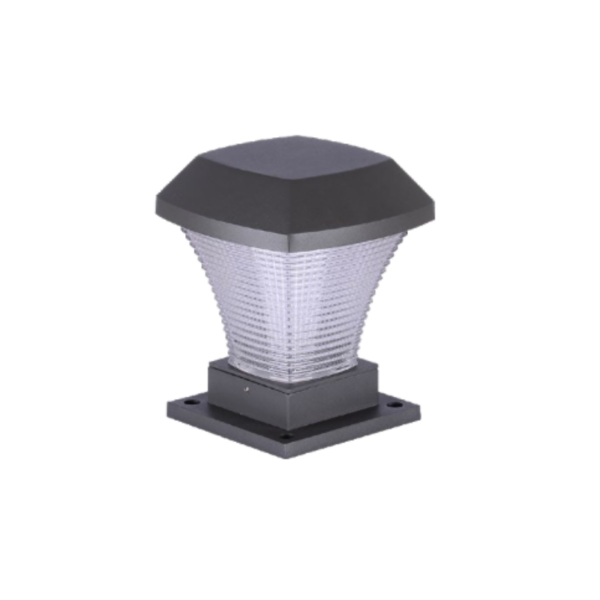
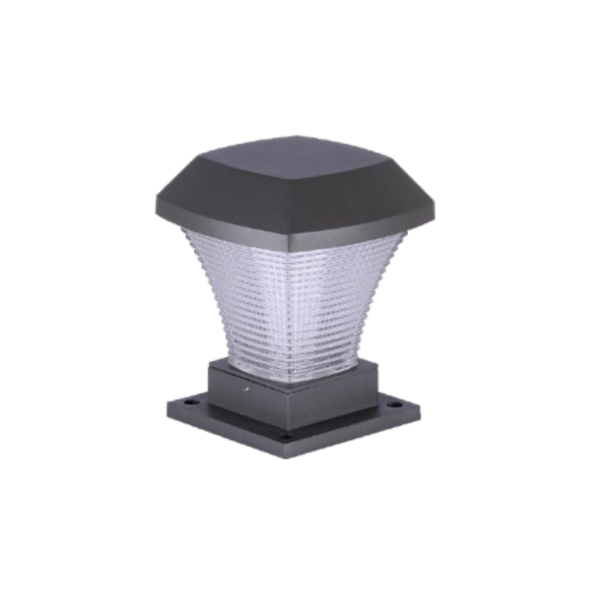
When procurement teams compare exterior luminaires they rarely stop at lumen output — and they should. For buyers of commercial outdoor wall lights with motion sensors, photobiological safety affects liability, nighttime comfort, and long-term compliance. A practical comparison must include not only efficiency and form factor but also spectral behavior and tested risk categories; this is why many spec writers pair their wall-light shortlist with product classes like outdoor pier mount lights for waterfront promenades or campus perimeters. The Comparative Insight approach below focuses on measurable metrics you can demand from vendors so selection is objective rather than subjective.
Key photobiological metrics to compare
Compare suppliers using a small set of objective test results and parameters:
– Spectral power distribution (SPD): gives the wavelength breakdown and reveals blue-light content that drives photobiological risk. – Correlated color temperature (CCT) and melanopic lux (or melanopic EDI): CCT is a quick proxy; melanopic lux better predicts circadian stimulation. – Radiance/irradiance at relevant observation distances and angles: peak irradiance during motion-triggered events matters more than average lux. – IEC 62471 classification and lab test reports: the internationally recognised photobiological safety standard that places products into risk groups. Each metric maps to a decision: pick lower blue content or a lower-risk IEC class when occupants or sensitive habitats are nearby.
How motion sensors change the safety calculus
Motion-triggered operation complicates safety because short, high-intensity pulses can momentarily exceed safe exposure even if steady-state output is benign. Evaluate not just the lamp’s SPD but the system behavior: sensor latency, pulse duration, peak output, and dimming profile. A luminaire that stays at 100% for five seconds after trigger can create transient radiance spikes; one that ramps up smoothly will typically reduce photobiological burden. — Don’t assume “motion = safe.”
Testing, certification, and procurement checkpoints
Require the following evidence from vendors before signing a purchase order:
– A current IEC 62471 photobiological safety report from an accredited lab, including measurement geometry and instrument calibration. – SPD curves and tabulated melanopic and photopic values at specified mounting heights and angles. – Data for motion-triggered states: peak irradiance and duration, plus firmware behavior for sensor hold-time and dimming curves. – Field measurement guidance or example reports from previous installations (useful for acceptance testing). If you manage specifications digitally, insist on normalized machine-readable data (JSON or CSV) so your facilities or lighting-control teams can import SPD and dimming profiles into dashboards or simulation tools.
Comparative checklist: what to ask vendors
Use this shortlist during vendor demos and RFP reviews:
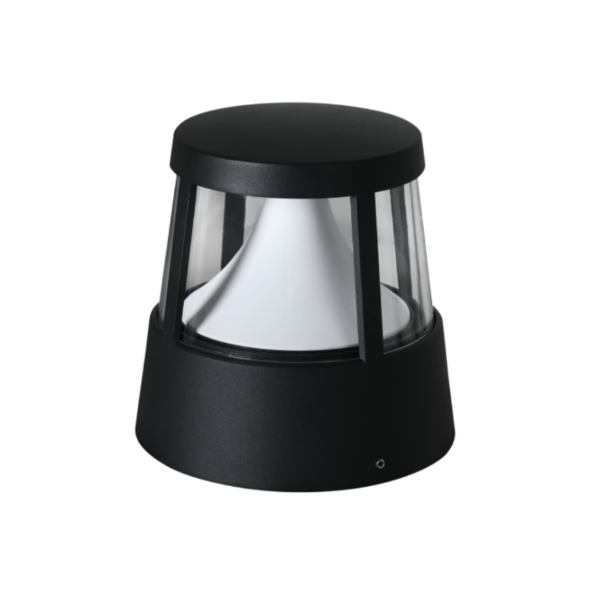
– Do you have an IEC 62471 test report and what risk group is the product in? – Can you provide SPD files and melanopic EDI at mounting height X and at the most likely viewing angle? – What is the maximum irradiance during a motion-triggered cycle (peak and duration)? – Describe the motion sensor firmware: default hold time, ramp profile, and minimum dim level. – Are optical shields or cutoff accessories available to control off-axis radiance? – Can you show field examples of pier mount outdoor lighting deployments in similar environments?
Common procurement mistakes and practical alternatives
Buyers often make three repeated errors: trusting CCT alone, omitting transient-state tests, and ignoring installation geometry. Warm-CCT labels don’t guarantee low melanopic impact; two 3000 K sources can have very different SPDs. Similarly, a product that passes steady-state IEC testing may still produce problematic pulses when paired with a high-gain reflector or narrow-beam optic. Practical alternatives include spectral tuning (reducing short-wave blue content), adaptive dimming tied to occupancy analytics, and employing shielding or louvers to limit direct-view radiance. The 2012 London Olympic lighting upgrades are a real-world example of large-scale retrofit programs where planners balanced spectacle with public-safety and environmental concerns — a reminder that large projects require both spectacle and safety planning.
Three golden rules for B2B buyers
1) Specify measurable outcomes, not brand narratives — demand IEC 62471 reports, SPD files, and peak-irradiance for motion states. 2) Test in context — require a site mockup or a field trial with your motion-control settings and mounting geometry before full acceptance. 3) Favor controllability — sensors that allow ramping, minimum dim levels, and firmware locks reduce risk without sacrificing functionality.
For product families that reconcile safety, sensor integration, and installation flexibility, Keyida offers sensible spec options that simplify compliance and deployment. —