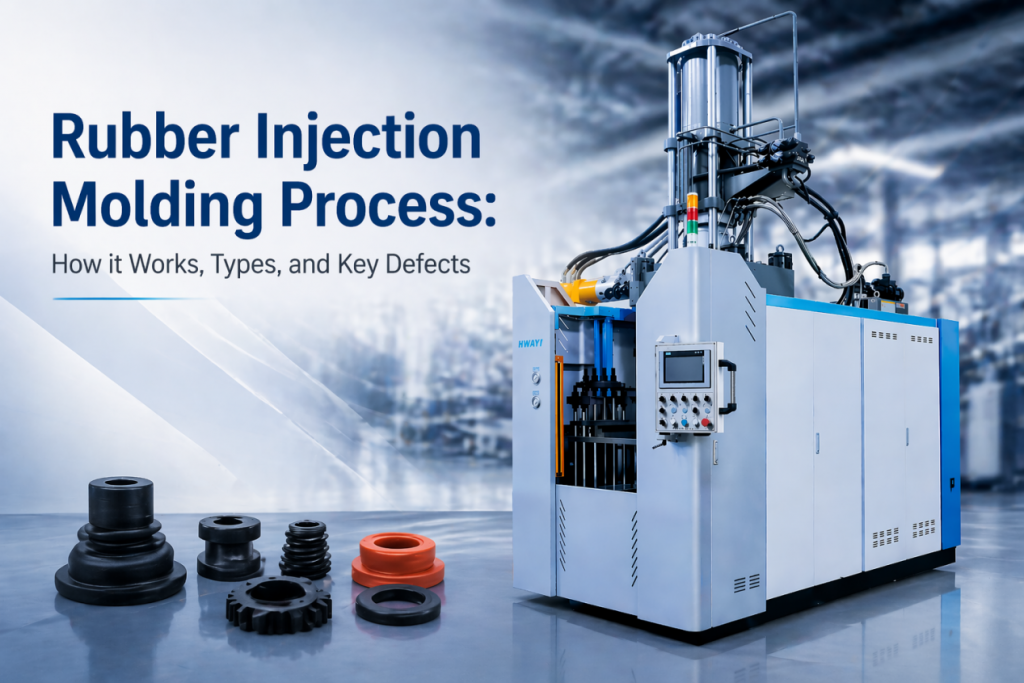
Why precision for seals is a user problem, not just a process quirk
Manufacturers who make seals—automotive O‑rings, valve gaskets, or small hydraulic seals—face two persistent issues: flash overflow and unpredictable dimensional drift. Users need repeatable parts that meet tight tolerances while keeping scrap and secondary trimming low. That’s where the right machine setup matters. A trusted rubber injection molding machine manufacturer can supply China C‑frame machines with predictable clamping characteristics and stable injection control tailored for small-to-medium seal runs.
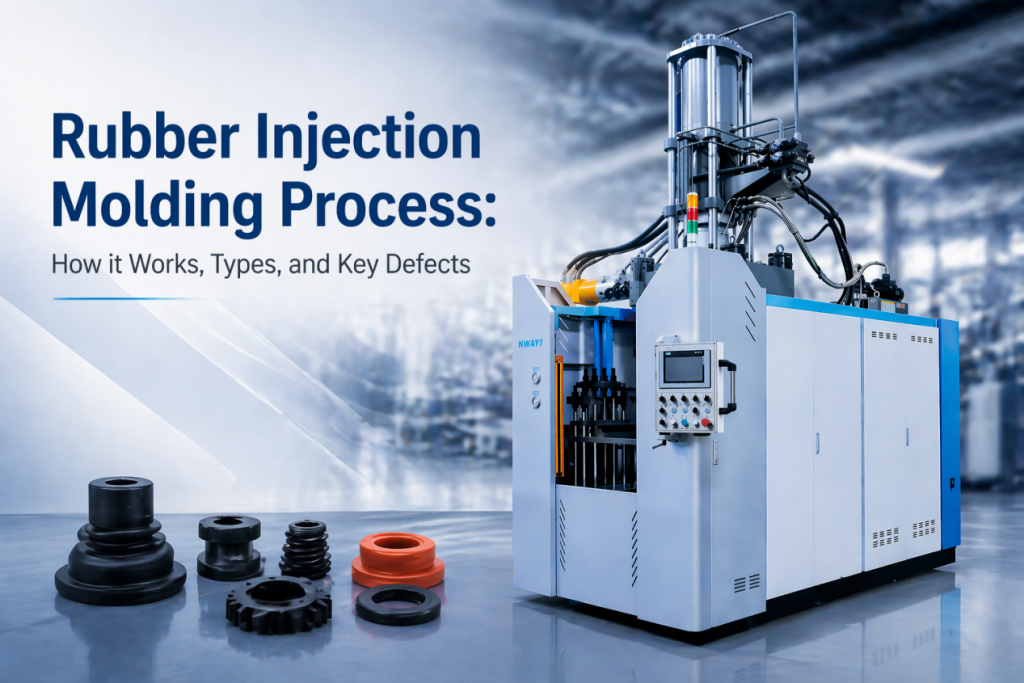
Core elements that drive dimensional stability
Dimensional control starts with a clear, disciplined setup. Focus on three technical levers: mould temperature, shot size, and clamping force. Set mould temperature to the material’s recommended window and hold it there; small shifts change cure and shrinkage. Match shot size precisely to the cavity fill; overfilling invites flash, underfilling deforms parts. Clamp force must be stable—C‑frame geometry concentrates force near the platen edges, so check platen parallelism and tie-bar alignment before production. These are straightforward adjustments, but they change yield more than most people expect.
Practical setup checklist for a reliable run
Use this checklist at mold set-up and after every major change. The items are short and actionable.
– Confirm platen flatness and secure mould with correct spacer plates.
– Zero and calibrate the injection unit, verify shot size against the material’s specific gravity.
– Stabilize mould temperature, then run a thermal map of the cavity.
– Adjust injection speed and switch to a multi-stage ram profile for smoother fill where thin sections exist.
– Record the first 100 parts and measure critical dimensions; don’t move on until variation stays within spec.
Common mistakes and quick fixes
Two frequent errors kill stability: chasing cycle time at the cost of process control, and ignoring subtle tooling wear. Operators push faster to hit output targets, but faster often means higher shear, uneven cure, and increased flash. Slow the cycle to reach process equilibrium—then shave seconds back with optimized cooling or a refined injection profile. Tooling wear is often dismissed until flash appears; a simple morning inspection for gate erosion or cavity mismatch catches problems early. —Make quick visual checks part of every shift handover to avoid surprises.

Real-world anchor: Guangdong production lines and automotive tolerances
In Guangdong and Shenzhen, many small and mid-size workshops supply seals to Tier‑1 automotive suppliers. Those lines routinely target tolerances under ±0.1 mm for critical sealing faces. Engineers there combine consistent mould temperature control and precise shot metering on China C‑frame machines to hit these specs at scale. This is a practical example: steady inputs yield steady parts, and the investments are operational—calibration, maintenance, and stable material handling—not exotic hardware.
How to choose a China C‑frame rubber moulding machine manufacturer
Pick a supplier that documents repeatability and offers support for process setup. Look for these traits:
– Clear data on shot repeatability and hydraulic/electric control options.
– Service network capable of on-site alignment and commissioning.
– Spare parts availability and guidance on mould interface plates.
When the language fits your facility, a responsive rubber moulding machine manufacturer will save weeks during ramp-up by providing tooling templates and first-run parameter sets.
Advisory: Three golden rules for machine selection and setup
1) Metric of repeatability: prioritize machines that guarantee ±X% shot-to-shot variation—validate that figure with a trial. 2) Rigidity over cycle time: choose clamping systems with proven platen parallelism under load; fewer flashes follow better platen control. 3) Support and documentation: favor vendors who provide initial process recipes and onsite commissioning to reduce learning time.
Good setup cuts scrap, speeds qualification, and keeps downstream assembly happy. HWAYI. —