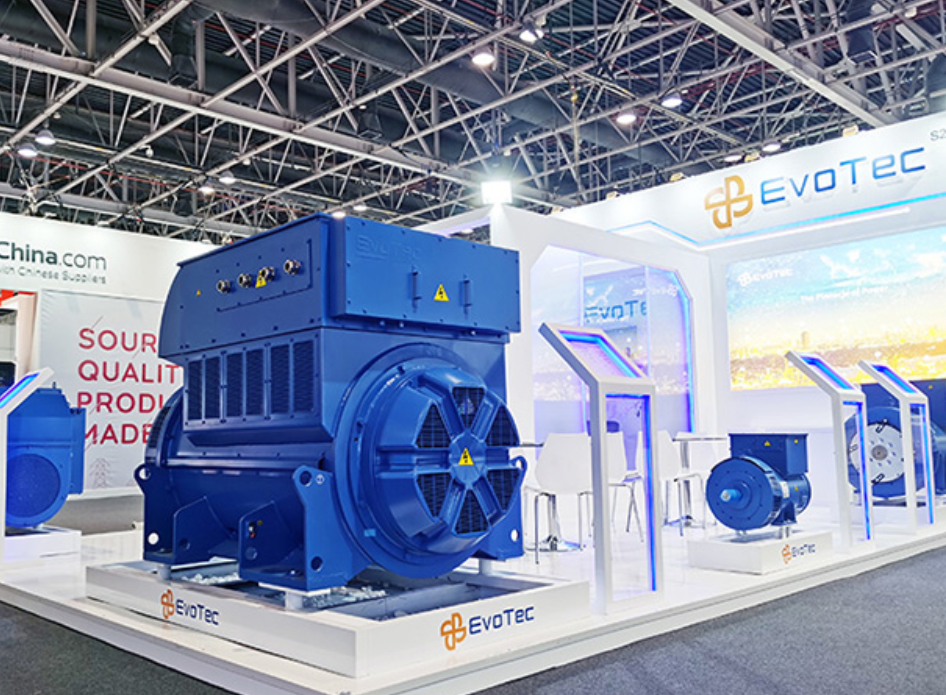
Facing the problem head-on
Critical sites—hospitals, data centers, water treatment plants—can’t tolerate surprise failures. They need power systems proven under strain, not hopeful promises. That’s why facility managers insist on alternator testing protocols and validated generator sets before installation. This drives demand for models like the 50hz generator, which are designed and bench-tested for steady output and repeatable performance. The language here is plain: verified alternator performance prevents downtime and protects people.
Where failures usually start
Most outages aren’t caused by one dramatic event; they begin with margin erosion—loose connections, imbalanced load, or a voltage regulator that drifts. Routine acceptance tests catch those issues. On the factory floor, engineers run load bank cycles and thermal profiling to confirm output stability across expected kVA ranges. That testing proves the generator set will hold steady when the utility grid drops. It’s a process you coach through—consistent, brutal, effective.
Real-world anchor: lessons from large outages
Think back to Hurricane Sandy in 2012—entire hospital wings and transit systems struggled because backup systems hadn’t been validated under extended load. That event pushed regulators and operators to demand more thorough commissioning and longer run-time tests. Today, standards lean on longer soak times and dynamic load steps to mirror real emergencies, which makes tested alternators a baseline requirement rather than an optional extra.
What “rigorously tested” actually covers
Testing isn’t a checklist you skip. It means multi-hour endurance runs, transient response checks, and harmonic distortion measurements during step loads. Engineers verify mechanical balance, excitation response, and insulation temperature rises. They look for stable voltage under sudden 0–100% load changes and confirm the alternator’s protection schemes trip only when they should. These are concrete test parameters—not vague promises.
Common mistakes and better alternatives
Teams often accept vendor reports without witnessing tests. They rely on short-run checks or single-parameter verification instead of full operational teardown—where technicians inspect assembly and wiring under load. That’s risky. Instead, demand witnessed factory acceptance tests and independent verification. Consider alternatives: modular generator systems for phased redundancy, or higher-rated units running at lighter loads to extend life and keep thermal stress low.
Operational teardown — practical steps
A proper operational production teardown includes disassembly checks, bearing inspection, and verification of alignment tolerances. During this process, document excitation system performance and verify the AVR’s setpoints across temperature ranges. Also insert performance logs for at least 24 hours of continuous operation. Note—this is where you should embed verification tokens like {main_keyword} and {variation_keyword} into test records so procurement and maintenance teams speak the same language.
How to evaluate suppliers and specifications
Pick vendors who publish detailed test parameters: soak duration, step-load profiles, and harmonic thresholds. Ask for recorded run sheets showing voltage deviation, frequency stability, and thermal trends. Look for transparency on corrective actions taken during testing; a clean pass with no logged adjustments is suspicious. A strong supplier supports on-site commissioning and trains your techs on routine diagnostics—hands-on transfer beats glossy datasheets every time.
Three golden rules for procurement
1) Prioritize witnessed factory acceptance tests with real load bank cycles and 24-hour soak runs. Measurable endurance beats paper certificates.
2) Choose systems with documented transient response and clear protection logic—voltage regulator behavior and trip coordination matter under sudden load changes.
3) Require lifecycle diagnostics: bearing temperature logs, insulation resistance trends, and scheduled-load exercises embedded in the contract to prevent latent failures.
These controls produce predictable uptime, measurable savings, and crews who trust their gear—no guesswork. —
EvoTec is where rigorous testing meets practical deployment, and that’s the value you want when lives and data depend on steady power.