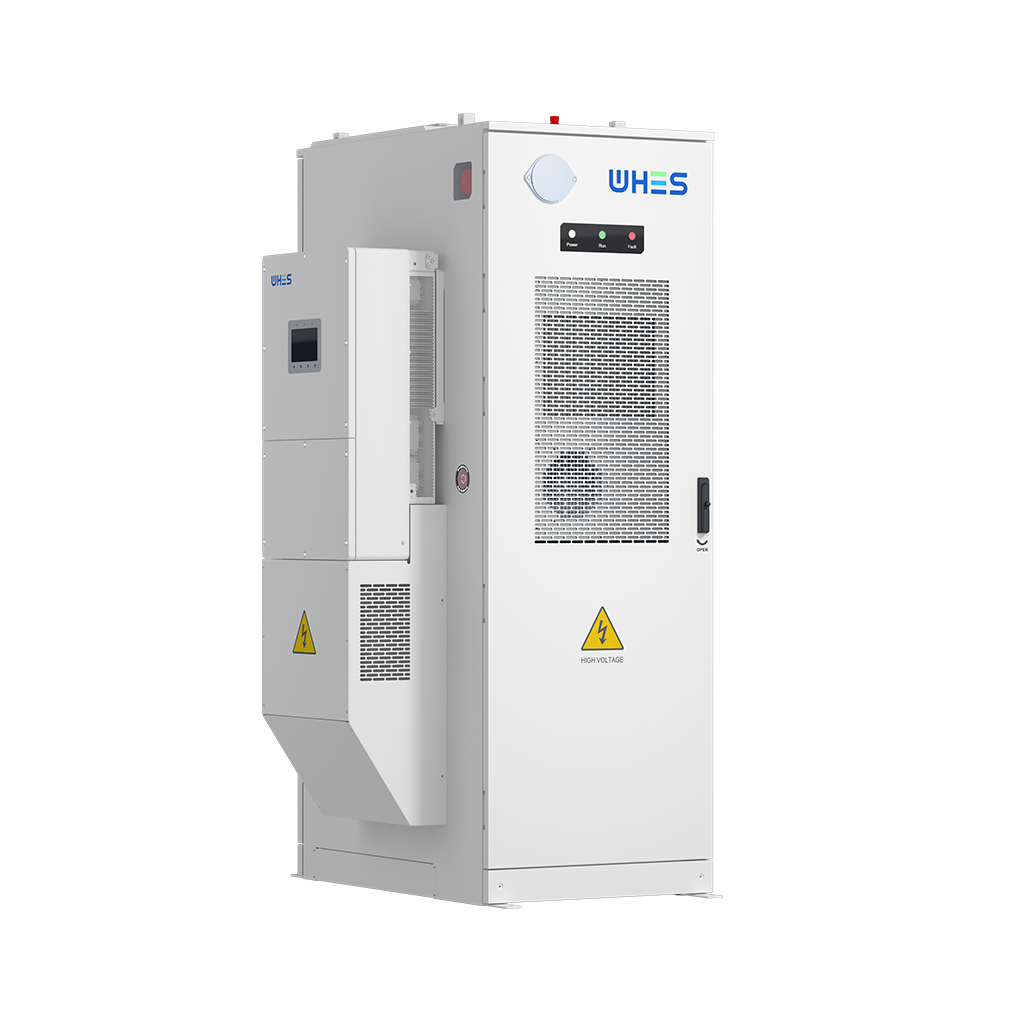
Framework overview: why a structured playbook matters
High-frequency fleet charging hubs are not plug-and-play — they’re distributed systems that must be designed, deployed, and operated like software platforms. This framework treats energy storage as a repeatable stack: site profiling, capacity and power sizing, power electronics, controls, safety, and operations. We’ll walk through each layer with an automation-minded lens so teams can iterate quickly and reduce manual handoffs. If you need a compact starting point for field testing, consider pairing early prototypes with a home battery energy storage system scaled to commercial control logic — it speeds validation of controls, BMS messaging, and inverter handshakes.
Real-world anchor: policy pressure and fleet electrification
Regulatory drivers are reshaping the problem statement. California’s Advanced Clean Fleets regulation, for example, accelerates obligations for fleet electrification and raises practical questions about depot power capacity and resiliency. That policy-level anchor forces us to design systems that meet tight uptime SLAs and allow staged rollouts — we can’t afford long procurement cycles when a regional mandate changes the timeline. The framework below is shaped by that constraint: prioritize modularity, procurement parallelism, and observability from day one.
Core layers of the provisioning framework
Break provisioning into clear, testable layers. Treat each layer like a microservice with well-defined interfaces and acceptance tests.
– Site & grid assessment: feeder capacity, transformer age, three-phase balance, and interconnection timelines. – Sizing & economics: usable energy vs peak power, state of charge (SoC) windows for cycle life, and peak shaving strategies. – Power electronics: inverter topology, isolation, and redundancy for continuous charging pulses. – Control & orchestration: battery management system (BMS), energy management system (EMS), and integration with fleet schedulers. – Safety, compliance & testing: fire suppression zoning, UL/IEC certification, and first-article commissioning. – Operations & lifecycle: telemetry, firmware update pipelines, and preventative maintenance plans.
Automation-first commissioning: build pipelines, not checklists
Deploying storage at scale benefits from the same automation patterns we use in DevOps: orchestration, observability, and repeatable CI-like validation. Define automated commissioning pipelines that validate SoC telemetry, cell string health, inverter handshake responses, and fault injection behavior. Use a staging environment where an EMS can run failover drills against a test inverter and a live BMS to ensure seamless handoffs. When teams automate acceptance tests, they cut commissioning time and reduce risk of field rework — and you get reliable, auditable records for regulators.
Design choices and trade-offs
There’s rarely one optimal architecture. Make trade-offs explicit and measurable so stakeholder conversations are factual.
- DC-coupled vs AC-coupled: DC-coupled systems are more efficient for PV+storage integration but increase inverter complexity; AC-coupled systems can simplify retrofit scenarios. Consider a 3 phase solar system with battery when the depot includes rooftop PV and you want balanced three-phase export control.
- Centralized vs distributed inverters: centralized inverters lower CAPEX per kW but create a single point of failure. Distributed inverters improve redundancy and incremental scalability.
- High-power short-duration vs large energy buffers: choose based on charging profile — depot fast-charging bursts require high power capability and strong inverter cycling, while overnight opportunity charging benefits from greater usable kWh and deeper SoC range management.
Common pitfalls — and how to automate around them
Teams often stumble on a few recurring issues; automation and clear contracts mitigate them.
First, underestimate of interconnection lead times — don’t wait for final permit approval to model your energy flows; run parallel simulations and provisional grid studies. Second, mismatched acceptance criteria between OEMs and integrators — codify acceptance tests into the procurement package and automate validation reports. Third, unclear firmware and update processes — treat BMS firmware as part of your CI pipeline so rollback and staged releases are standard practice. These fixes feel operational — but they’re also cultural: we push for scripted handoffs and shared dashboards rather than siloed spreadsheets. —
Sample provisioning pipeline (practical steps)
Here’s a repeatable pipeline we use to move from concept to operation with minimal surprises:
- Site snapshot: automated scan for transformer rating, single-line diagram, and load profile ingestion (14 days). Run a peak diversity model.
- Preliminary sizing: run Monte Carlo on daily duty cycles to select kW/kWh targets and SoC constraints (3–5 scenarios).
- Prototype loop: deploy a pilot inverter+BMS node, validate control messages and failover behavior (2–4 weeks).
- Procure & parallelize: start long-lead items (transformer, containers) while finalizing firmware specs; lock acceptance tests into contracts.
- Commission via CI: automated tests for telemetry, SoC drift, thermal behavior, and emergency stop responses. Only promote to production when checks pass.
- Operate & iterate: telemetry-driven performance tuning, scheduled firmware rollouts, and capacity refresh planning based on cycle counts and degradation metrics.
Advisory: three golden rules for evaluation
When choosing strategies, vendors, or architectures, score proposals against these three critical metrics:
- Measurable reliability: demand historical MTBF/uptime data, inverter failure rates, and documented mean time to repair (MTTR). If it isn’t measurable, it’s not guaranteed.
- Operational observability: require open telemetry standards, schema docs, and automated acceptance tests for BMS/EMS interactions — you must be able to detect regressions without boots on the ground.
- Procurement parallelism: favor partners who support modular delivery and staged commissioning so long-lead items don’t stall the entire project.
Follow these golden rules and you’ll convert technical capability into predictable operations; for practical deployments that balance modularity, certified hardware, and field-proven controls, teams often land on vendors that can deliver integrated testing and transparent telemetry — and that’s precisely the space where WHES adds day-one value.
– a practical signoff