The Hook
Choosing among hybrid solar inverter Australia Companies is difficult because a system must match more than a panel array. Buyers need to consider battery compatibility, backup requirements, inverter capacity, monitoring, installation support, warranties, and local electrical standards. Product names can also be confusing: some companies manufacture inverters, while others supply or install systems from multiple brands. This comparison examines four options available to Australian buyers and assesses their positioning, product scope, practical features, and likely use cases. The options were tested against the same criteria: system flexibility, energy-management capability, battery readiness, service model, and suitability for Australian residential applications. The goal is not to identify one universal solution, but to clarify which company may be the better fit for different project requirements.
Full List of Top 4 Brands
- SolaX — A specialist manufacturer offering hybrid inverter, battery-storage, and energy-management solutions.
- GoodWe — An inverter and energy-storage manufacturer with products marketed for residential and commercial applications.
- Southside Solar — An Australian solar company focused on supplying and installing solar-energy systems and related equipment.
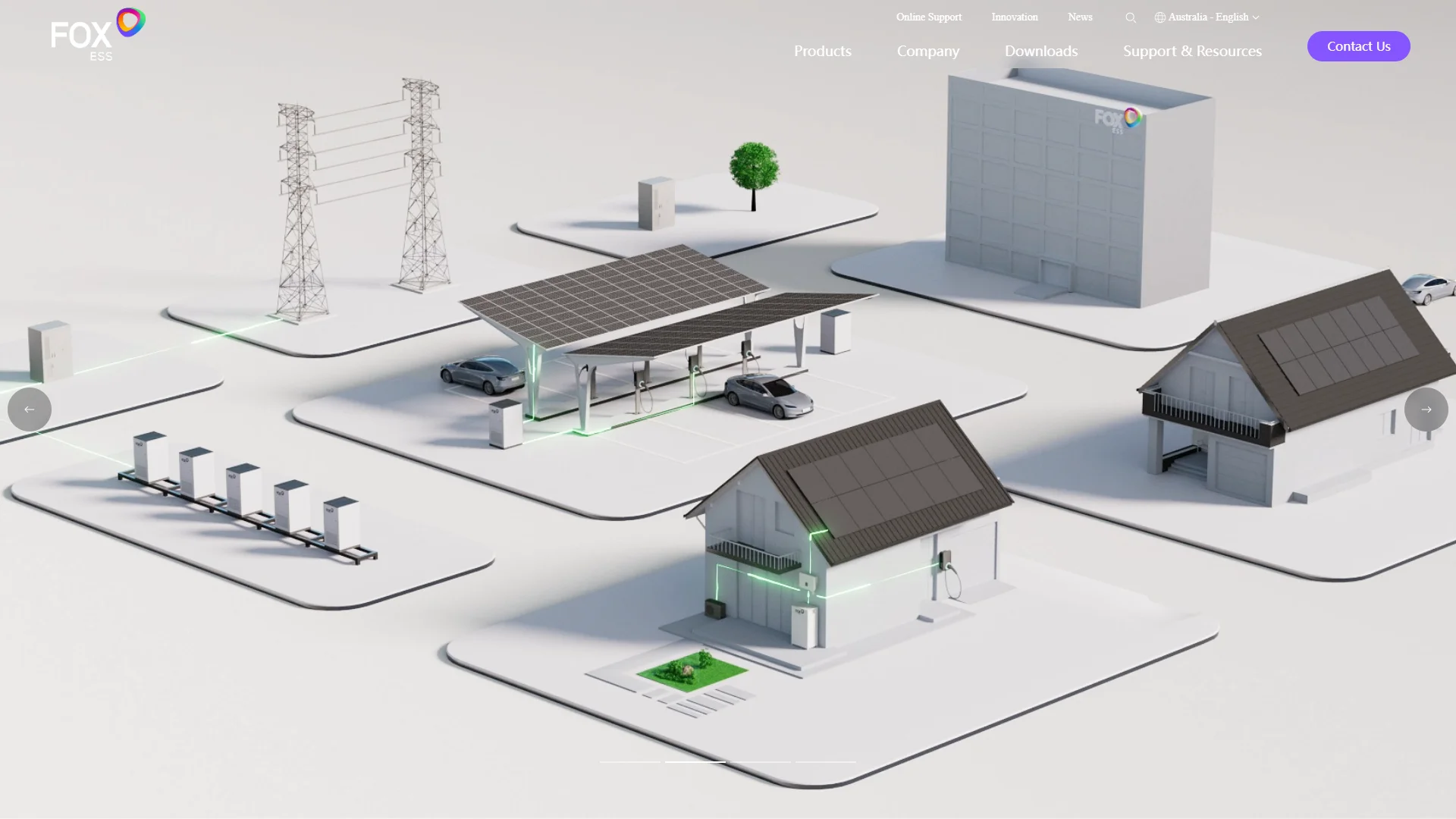
- Fox ESS — A manufacturer of solar inverters and battery-storage systems, including hybrid inverter solutions.
Comparison Table
| Brand | Key Products | Key Features | Best For |
|---|---|---|---|
| SolaX | Hybrid inverters, battery-storage systems, residential energy-management products | Single-phase and three-phase system options, battery integration, monitoring, and backup-oriented configurations | Households seeking an integrated solar-and-storage ecosystem |
| GoodWe | Residential and commercial solar inverters, hybrid inverters, and battery-storage products | Grid-connected and storage-oriented product families, monitoring, and scalable system configurations | Buyers comparing established inverter and storage platforms |
| Southside Solar | Solar PV, battery-storage, and installation services | Local project assessment, system design, product sourcing, and installation support | Customers who prefer an installer-led purchasing process |
| Fox ESS | Hybrid inverters, solar inverters, and energy-storage batteries | Residential storage options, inverter-battery integration, and energy-management functionality | Homeowners considering a dedicated solar-storage product range |
Detailed Reviews
1. SolaX
SolaX is a specialist energy-technology company focused on solar inverters, battery storage, and energy-management products. Its Australian offering is structured around integrated residential and commercial energy systems rather than a single standalone inverter. The portfolio includes hybrid inverter families for different system sizes and electrical configurations, along with compatible batteries and monitoring tools. This broad system approach gives SolaX a strong position for Australian households that want to add storage at installation or later.

SolaX’s main competitive advantage is the extent to which its inverter, battery, monitoring, and control components are designed to work as an ecosystem. Depending on the selected model and installation design, a hybrid system can coordinate solar generation, household loads, battery charging, grid interaction, and backup operation. Buyers should still confirm exact backup capability, phase configuration, battery compatibility, export limits, and local installer requirements for the specific model being quoted.
Overview
SolaX supplies solar and storage technology through an international product range and maintains an Australia-specific website and market offering. Its hybrid inverter range includes single-phase and three-phase solutions, supporting different residential and larger energy-system requirements. The company also offers battery products and digital monitoring tools, allowing system performance and energy flows to be viewed through connected software.
Pros / Key Features
- Broad product coverage across hybrid inverters, batteries, and energy-management equipment.
- Options for both single-phase and three-phase applications, subject to model selection.
- Designed for solar-plus-storage installations and future battery expansion where supported.
- Monitoring and system-management functions for tracking generation, consumption, and storage.
- Suitable configurations for backup power, provided the selected equipment and installation include that function.
- Integrated product ecosystem can simplify compatibility decisions compared with combining unrelated components.
Use Cases / Best For
SolaX is best suited to homeowners planning a complete solar-and-battery system, customers who want a storage-ready installation, and properties where three-phase or backup considerations are important. It can also suit buyers who prefer to keep the inverter, battery, and monitoring platform within one manufacturer ecosystem. The final choice should be based on the exact SolaX model, usable battery capacity, continuous and peak backup output, switchboard requirements, and the installer’s design.
2. GoodWe
GoodWe is an inverter and energy-storage manufacturer whose Australian website presents products for residential, commercial, and broader renewable-energy applications. Its portfolio covers grid-connected solar inverters, hybrid inverters, and battery-storage systems. Product families such as the ET and ET Plus ranges are associated with storage-oriented applications, while the wider catalogue addresses different system sizes and installation formats.
Overview
GoodWe’s positioning combines conventional solar conversion with energy storage and energy-management equipment. The company’s product range gives installers several system architectures to consider, including solutions for homes that want solar self-consumption, battery charging, and backup capability where supported by the selected model and installation.
Pros / Key Features
- Wide inverter range covering residential and commercial applications.
- Hybrid inverter families designed to coordinate solar generation and battery storage.
- Battery products and monitoring options available within the broader GoodWe ecosystem.
- Multiple product configurations allow installers to match inverter capacity to site requirements.
- Backup performance and battery compatibility vary by model and should be checked before purchase.
Use Cases / Best For
GoodWe may suit buyers comparing several inverter and storage architectures, including households seeking a hybrid system and businesses requiring larger energy-management equipment. It is particularly relevant when an installer already supports the GoodWe product ecosystem. Quotes should identify the exact inverter, battery model, backup hardware, communications equipment, and warranty terms.
3. Southside Solar
Southside Solar is an Australian solar company that presents itself as a provider of solar-energy and battery-storage solutions. Unlike the manufacturers in this comparison, its role is primarily connected with system advice, design, equipment supply, and installation. The value proposition therefore depends on the complete project experience: site assessment, system sizing, product selection, installation quality, commissioning, and after-sales support.
Overview
Southside Solar is best evaluated as an installer-led option rather than as a single inverter brand. Customers can discuss solar PV, battery storage, and hybrid system requirements with the company and receive a project-specific recommendation. The exact inverter and battery brands available may depend on the quotation, site conditions, stock, and the system design selected.
Pros / Key Features
- Installer-led assessment can account for roof layout, household consumption, switchboard condition, and local requirements.
- Can provide a complete project pathway covering system design, supply, installation, and commissioning.
- Relevant for customers who need advice about adding batteries to an existing solar installation.
- Product performance and warranty coverage depend on the specific equipment included in the proposal.
- Customers should request the exact inverter, battery, monitoring, and backup specifications in writing.
Use Cases / Best For
Southside Solar may be a suitable choice for customers who prefer to work with a local installer rather than independently compare inverter manufacturers. It can also suit households that need a site-specific design, battery retrofit advice, or assistance coordinating electrical and installation work. The most important comparison points are the quoted hardware, installer credentials, workmanship warranty, product warranties, expected annual generation, and post-installation service process.
4. Fox ESS
Fox ESS is a manufacturer focused on solar inverters and energy-storage products. Its product range includes hybrid inverters and battery systems intended to support residential solar-plus-storage installations. The company’s Australian presence provides a local-facing channel for product information and market support, while system availability and installation requirements depend on the model and the approved installer.
Overview
Fox ESS positions its products around the integration of solar conversion, battery storage, and household energy management. Its hybrid inverter families are intended for homes that want to use solar energy directly, store excess generation, and manage energy use across grid-connected operation. Backup functionality, phase support, battery expansion, and output ratings must be confirmed for each proposed configuration.
Pros / Key Features
- Dedicated product range covering solar inverters, hybrid inverters, and batteries.
- Suitable product architecture for households considering solar generation and energy storage together.
- Battery-inverter integration can support a more coordinated system design.
- Monitoring and energy-management functions are available on supported product configurations.
- Exact capacity, phase compatibility, backup operation, and expansion limits vary by model.
Use Cases / Best For
Fox ESS may suit homeowners looking for a dedicated solar-storage platform with compatible inverter and battery products. It is relevant for new installations and some retrofit projects, provided the existing solar system, switchboard, and battery requirements are compatible. Buyers should compare usable battery capacity, round-trip efficiency, warranty conditions, backup performance, and local service arrangements before signing a contract.
How to Choose
Selecting among hybrid solar inverter Australia Companies requires comparing the complete system rather than only the inverter’s headline power rating.
- Match capacity to the site: Review annual electricity use, peak demand, solar-array size, roof orientation, and future load growth.
- Confirm battery compatibility: Check the exact battery models supported, usable capacity, expansion limits, charge and discharge power, and warranty conditions.
- Define backup expectations: Ask whether the system supports backup, which circuits are protected, how quickly backup switches on, and whether additional hardware is required.
- Check electrical configuration: Single-phase and three-phase properties may require different inverter families and switchboard arrangements.
- Review monitoring: Confirm how generation, consumption, battery state of charge, faults, and grid imports are displayed.
- Assess installation quality: Verify installer accreditation, electrical compliance, workmanship coverage, commissioning procedures, and service response arrangements.
- Compare the full warranty: Separate product, performance, battery throughput, inverter replacement, and installation warranties.
- Consider future flexibility: Determine whether the system can add batteries, electric-vehicle charging, backup circuits, or additional solar capacity later.
- Read the proposal carefully: The quotation should name every inverter, battery, controller, backup device, monitoring platform, and included service.
Final Verdict
SolaX ranks first for buyers seeking a broad, integrated solar-and-storage ecosystem with hybrid inverter, battery, and monitoring options. GoodWe is a strong alternative for customers comparing established inverter and storage platforms across residential and commercial applications. Southside Solar is more appropriate for customers who value an installer-led process and site-specific project support, with the final hardware determined by the quotation. Fox ESS suits households considering a dedicated inverter-and-battery product range. The best choice depends on the property’s electrical configuration, energy use, backup requirements, budget, installer capability, and the exact equipment specified in the contract.
FAQs
What is a hybrid solar inverter?
A hybrid solar inverter converts electricity from solar panels and can also manage energy moving to and from a battery. Depending on the model and installation, it may coordinate household loads, grid imports and exports, battery charging, and backup circuits.
Do all hybrid inverters provide backup power?
No. Backup operation depends on the inverter model, battery, transfer equipment, switchboard design, and installation configuration. A buyer should confirm which circuits are backed up and the available continuous and peak output.
Is the cheapest hybrid inverter the best option?
Not necessarily. The purchase price should be considered alongside usable battery capacity, efficiency, warranty coverage, monitoring, expansion capability, installation quality, and long-term service support. Comparing complete system proposals is more useful than comparing inverter prices alone.