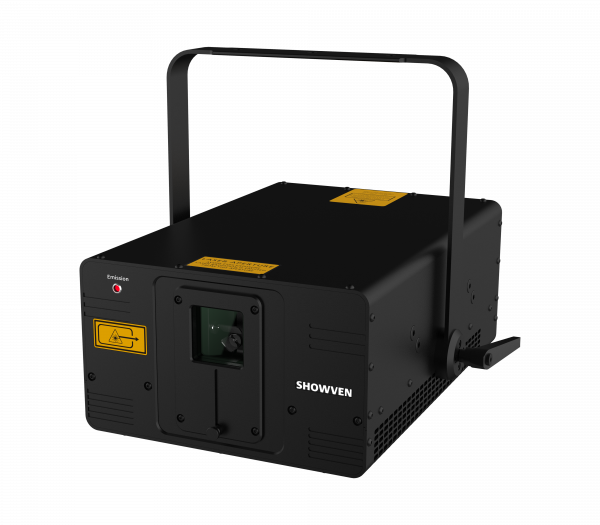
Introduction: A Night, a Cue, and the Split-Second That Matters
You’re in a packed arena, the drop is coming, and your finger hovers over the GO. Stage Laser Lights look magical from Row 10, yet they can feel merciless at the console. With stage laser lighting, one mistimed cue can ripple into the crowd—glorious or chaotic. Industry numbers suggest that 1–2 seconds of cumulative latency across a set can be enough to desync visuals from audio, and that translates to lost impact and safety stress. So here’s the real question: how do we stop the small timing leaks that become big show problems?
I’ve seen crews nail pyro, then lose the room because the lasers chased a beat that moved under their feet (tempo drift is sneaky). The scenario keeps repeating across venues of every size. And the data backs it: mismatched scan rates and patching errors can multiply under pressure. Are we optimizing the link between timing, power, and beam control—or just crossing fingers? Let’s break it down, quickly and clearly, and move toward choices that make the next show tighter, brighter, safer. Onward.
Part 2: The Hidden Pitfalls Behind Perfect Cues
Why do simple setups fail?
Technical truth first: most mistakes aren’t “operator errors.” They’re system mismatches. In stage laser lighting, a clean timeline can still drift if your DMX mapping doesn’t match the fixture profile, your scan rate is set for the wrong content density, or your beam divergence isn’t tuned for throw distance. Add power converters that introduce noise on a shared circuit, and you’ll swear the rig is haunted. Look, it’s simpler than you think—but only once you separate creative timing from signal timing.
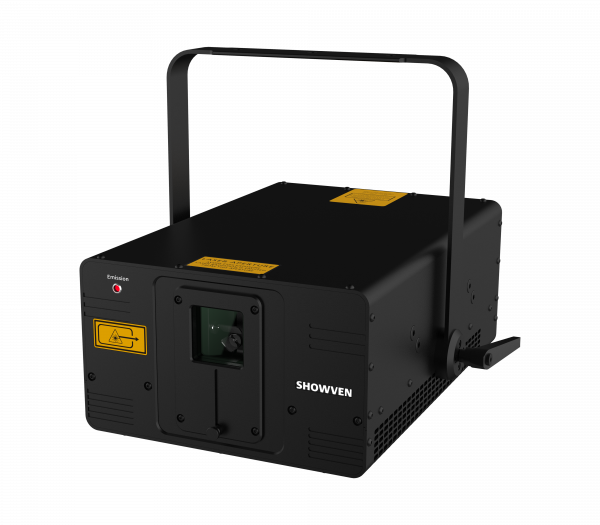
Two pain points hide in plain sight. First, calibration debt: we rehearse at half-rig brightness, then run show night at full power, and the safety attenuation map doesn’t scale as expected—edges bloom, zones shift, and audience scanning rules get tight. Second, timing hops: when timecode rides through multiple nodes, each edge device adds latency. Even 10–15 ms at each hop can mean a visible offset by the finale. The fix starts with verifiable signal flow, hard limits on scan angles, and content matched to the galvanometer bandwidth. In other words, map the pipeline, not just the cues.
Part 3: Comparative Leap—From Guesswork to Predictive Control
What’s Next
We’re moving from manual best guesses to systems that see, learn, and sync. Old-school shows tied lasers tightly to MIDI or LTC, hoping the chain stayed clean. The next wave uses networked timecode, predictive buffering, and content-aware drivers that align the galvanometer response with the music, not just the clock. Pair that with sensors that watch temperature and drift in real time, and your cues land with precision even as the room heats up—funny how that works, right? In larger rigs, edge computing nodes can pre-resample frames to match actual scan capacity, reducing flicker without flattening effects.
Against that backdrop, concert lasers evolve from “fixtures” to smart endpoints. Compare the old and new: instead of broad safety zones, you get dynamic attenuation maps that adapt to distance and haze level; instead of brute-force power to punch the air, you get controlled beam profiles that keep brightness while protecting the audience. Case in point: a touring act shaved 300 ms of chain delay by moving from mixed DMX/Art-Net to synchronized timecode over IP and FPGA-based signal processing—hits locked, eyes relaxed. The lesson? Design for the signal path first, and creativity stops fighting the hardware.
Before you choose your next path, apply three clear metrics. One: end-to-end latency budget—measure from timecode source to scanner driver, not just “console to fixture.” Two: scan rate to content ratio—complex frames need verified bandwidth to avoid artifacts and heat stress. Three: safety integrity—zone mapping, attenuation stability, and compliance under full-output rehearsals, not just dim tests. Keep those front and center, and your rig behaves like a partner, not a puzzle. For deeper technical references and product lines, see Showven Laser.