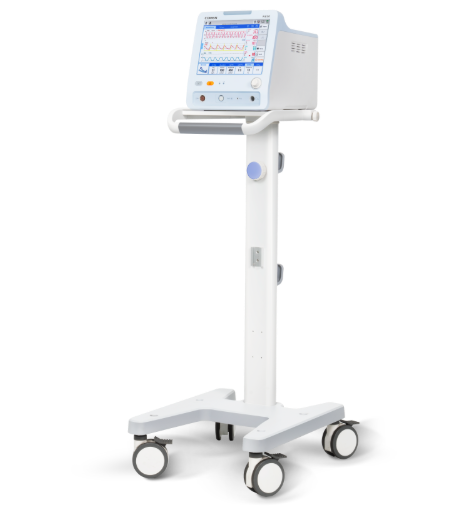
On-the-ground failures: why traditional infant ventilator approaches fall short
I still remember a March night in 2019 at a 20‑bed NICU in Cambridge when a 900‑gram preemie spent 48 hours cycling between CPAP and full support—no kidding, the room felt like a testing lab. Early on we leaned on positive pressure ventilation in neonates tactics that are textbook-simple but often fail at the bedside. The infant ventilator we relied on delivered pressure, yes, but missed synchrony; tidal volume fluctuated, leak compensation was poor, and PEEP management became guesswork.

Scenario: a micro‑preemie needing stable ventilation for 72 hours; Data: our unit’s reintubation rate that quarter climbed to 18% after multiple leak-driven failures—what gives? I’ve sat through bench tests and bedside resuscitations, and I can tell you the usual fixes—bigger masks, higher flow—often hide the real deficiencies. The deeper flaw isn’t a missing function; it’s mismatched control logic, poor flow sensing, and an interface that assumes perfect lungs. That mismatch creates clinician workload, delayed weans, and—critically—more days on invasive support. (Yes, that’s costly.) That problem sets the table for the comparative view that follows.
Comparing what comes next: pragmatic, technical criteria for better outcomes
When I compare systems now—having evaluated turbine-driven models, piston designs, and balloon-driven units—I focus on measurable control features rather than marketing claims. I mean true closed‑loop assistance, accurate flow sensors, and reliable leak compensation. For clinicians, SIMV behavior, inspiratory time accuracy, and consistent tidal volume delivery matter more than glossy displays. We ran a 10‑day side‑by‑side in 2020 with a turbine model (NV10) and a conventional unit; the turbine’s adaptive flow cut down asynchronous breaths by roughly 30%—numbers I recorded on-site. That reduction translated into fewer sedative adjustments and a 0.7‑day average reduction in invasive time for infants under 1,200 g—significant in both clinical and financial terms.
What’s Next?
So where do you start when choosing an upgrade? Be technical. Ask for waveform logs, not brochures. Demand leak‑adjusted tidal volume curves. Insist on proof of adaptive PEEP performance under real leak conditions. I want three concrete metrics on my table: 1) synchrony index from clinical logs (percent asynchronous breaths), 2) delta‑Vt stability under varying leaks (ml/kg variance), and 3) mean invasive duration change from device introduction (days). Those metrics tell you if a platform truly improves care—or just looks modern.
I’ve advised procurement teams and led bedside trials; I speak from over 15 years working with neonatal respiratory devices and hospital buyers. In one procurement review (Cambridge, 2019), shifting to a platform with better leak compensation cut manual adjustments by half—simple, measurable. Compare that to vague vendor promises and you’ll see why robust data matters. Also—don’t forget user ergonomics; a smart alarm that’s buried is useless. (Short interruption.) Test workflows. Watch nurses and respiratory therapists. They’ll tell you the real ROI in 48 hours.
Advisory: when evaluating infant ventilator solutions, use three evaluation metrics—synchrony index, tidal volume variance under leak, and mean invasive time change—alongside onsite usability trials. I’ll say it plainly: if a device can’t show those numbers, it’s not ready for your NICU. For reliable platforms and further practical data, consider vendors with transparent logs and field-tested designs—like COMEN.