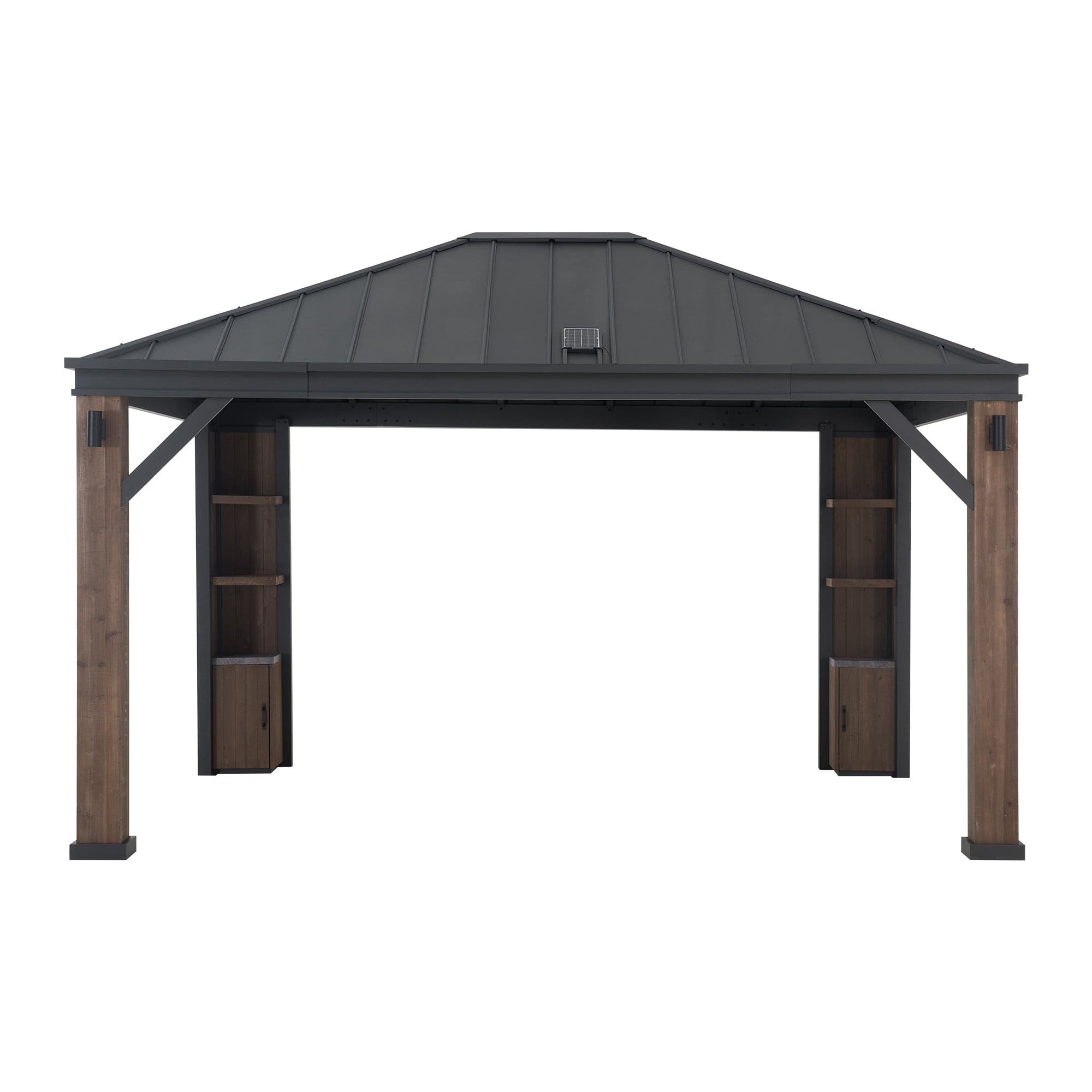
How to shop for Sunjoy Hardtop Gazebos when the page’s stated weather-related claims for roof style comparisons matters
Start with how your outdoor space will work
Families comparing SUNJOY hardtop gazebos should begin with the activities the structure needs to support, rather than treating a roof label as the decision by itself. A dining table, grill area, children’s play space, or quiet seating corner may each create different priorities for access, furniture placement, and daily use. Measure the intended location and note fixed features such as walls, fences, trees, doors, and paths. Then consider how people will move through the space when the gazebo is occupied.

This first step keeps the shopping process practical. The collection page presents a range of roof-style and material labels, but those labels do not describe every detail of every model. Your goal is to connect the available category information with the physical setting and routine you have in mind.
Read roof-style labels as a starting point
The hard-top collection labels roof styles including two-tier, gable, hip, octagon, and shed. It also lists materials including steel, aluminum, polycarbonate, and wood. These terms can help narrow a long product category, but they should not be treated as a complete specification for a particular gazebo.
For example, a shopper might use the roof-style filter to create a short list, then compare the selected product pages for dimensions, layout, included components, and other stated details. A roof shape may influence how the structure fits the visual character of a patio, but the page-level label alone does not establish a model’s performance, installation requirements, or suitability for a particular location.
The collection page’s hard-top versus soft-top comparison also covers roof materials, weather-related claims, maintenance expectations, and use contexts. That makes it a useful orientation tool. It does not remove the need to distinguish a general comparison from a statement about one specific listing.
| Collection-page information | What it covers |
|---|---|
| Roof-style labels | Two-tier, gable, hip, octagon, and shed |
| Material labels | Steel, aluminum, polycarbonate, and wood |
| Hard-top versus soft-top comparison | Roof materials, weather-related claims, maintenance expectations, and use contexts |
| Accessory statement | Most models support ceiling hooks, privacy netting, curtains, or solar panels |
Use the page’s weather discussion carefully
When evaluating permanent gazebo options, separate what the page explicitly presents from the conclusions you are tempted to draw. The comparison table can help you identify the subjects the retailer considers relevant: roof material, weather-related claims, maintenance, and intended use. It does not, by itself, answer every question about a selected model or every condition at your property.
A sensible reading process is to record the exact wording that applies to the category comparison, then look for model-specific information before making a choice. Consider the weather patterns your household actually plans around, the amount of shade or shelter you want, and whether the structure will remain part of the space for most of the year. These are planning questions, not guarantees about performance.
Also keep the site layout in view. A structure that looks suitable in a category grid may still need to be assessed against the available footprint, furniture arrangement, access routes, and the way doors or nearby features open. The useful comparison is therefore not simply “which roof is best?” It is “which listed option deserves closer review for this setting and use?”
Consider accessories as a planning question
SUNJOY says most models support accessories such as ceiling hooks, privacy netting, curtains, or solar panels. For a family that hosts outdoors, those possibilities may prompt useful questions about lighting, privacy, storage, and how the space will feel at different times of day.
However, the statement is collection-level and uses the word “most,” so it should not be read as confirmation that every accessory fits every model. Treat accessories as part of the comparison process. If a ceiling hook matters for lighting, or curtains matter for privacy, make that requirement part of the model review instead of assuming it from the collection page.
This approach also helps prevent unnecessary purchases. First decide which function matters. Then assess whether the selected listing describes a compatible option. The same method applies to any planned addition, whether it concerns shade, privacy, lighting, or seasonal use.
Build a model-specific question list
Once you have narrowed the category, use a short question list for each candidate. Start with the roof style and material labels shown for that model. Next, compare the stated dimensions with the measured area and your intended furniture layout. Then review any page-listed information about use context, maintenance, or weather-related characteristics without extending those statements into promises the page does not make.
Ask whether the product page identifies the features you actually need. If accessories are important, look for the relevant model-level description rather than relying only on the collection’s general accessory statement. If the visual form matters, compare the roof-style label with the surrounding architecture and the sightlines from the house.
Finally, write down which points are confirmed by the listing and which are simply preferences or questions for further consideration. This keeps a product comparison honest. It also makes it easier to explain your choice to other household members who may care about appearance, hosting, maintenance, or flexibility for different activities.
Make the decision fit the real use
A strong shopping decision does not require treating one roof style or material as universally superior. It requires matching the available category information to the space, the people using it, and the features that genuinely matter. Start with the location and routine. Use the collection labels to narrow the field. Read the hard-top comparison for its stated topics, and then assess the exact model listing before relying on a detail.
SUNJOY provides a useful starting point through its hard-top collection’s roof-style and material labels, its hard-top versus soft-top comparison, and its statement about accessory support. The collection-level labels include two-tier, gable, hip, octagon, and shed roofs, plus steel, aluminum, polycarbonate, and wood materials; verify each option on the specific model listing before treating it as a model fact.