Comparative lead: framing procurement goals and training alignment
The immediate task for a military engineering procurement office is to reconcile tactical requirements with lifecycle cost and technical risk. A comparative approach clarifies where high-density, modular coaxial architectures meet operational needs versus where alternative configurations serve better. Early alignment with training pipelines is essential; procurement must reflect certified practices and exercises such as Project Convergence, and should coordinate with ongoing drone training for military programmes to validate interoperability. Key terms to track from the outset include coaxial rotor behaviour, payload flexibility, and UAS communications architecture.

Procurement objectives and operational profiles
Define mission sets first. Is the primary role close reconnaissance, persistent ISR, or rapid logistics support? Each profile changes priorities for flight endurance, payload capacity, and ground control station integration. For reconnaissance and C4ISR roles, prioritize sensor payload compatibility and secure datalinks. For tactical resupply, assess link budget against expected airframe density and launch-recovery cadence. Comparative scoring of requirements prevents specification creep and reduces acquisition risk.
Design trade-offs: density, modularity, and coaxial architecture
Coaxial rotor platforms offer compact footprints and higher thrust-per-volume, which benefits high-density packing in shipboard or austere forward basing. Modularity eases mission swaps—swap a sensor pod for a small logistics canister without redesigning the airframe. Yet coaxial systems typically increase mechanical complexity and maintenance intervals; spare part logistics must be quantified. Compare three vectors rigorously: performance per kilogram of payload, mean time between failures, and mean time to repair. Those metrics expose hidden sustainment costs and inform whether a coaxial tactical UAV is the right procurement choice.
Field validation and training integration
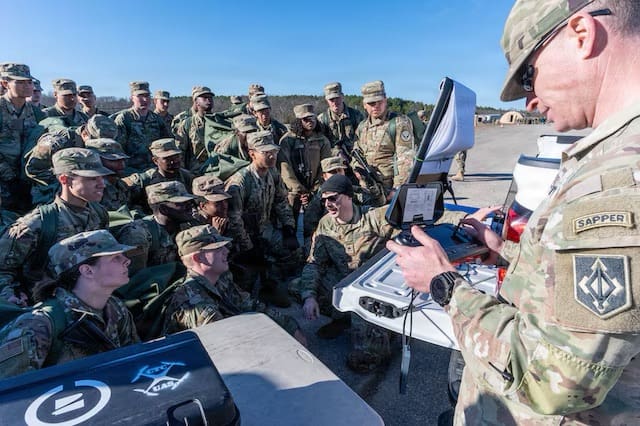
Procure only after demonstrable field validation. Conduct combined exercises with signal-security testing and contested environment simulations. Integration with live training pipelines and doctrine—ideally through partnerships that include accredited drone following military train events—ensures the chosen platform meets human and technical workflows. Flight trials must evaluate swarming control, link budget under jamming profiles, and interoperability with existing GCS systems. This reduces surprises when the unit deploys the asset to a high-tempo theatre.
Common procurement mistakes
Procurement teams frequently repeat the same errors—avoid them by using a disciplined comparative rubric:
– Overemphasis on single-platform performance metrics at the expense of systems integration and logistics. – Neglecting spare-parts pipelines and vendor obsolescence schedules—especially for bespoke coaxial components. – Failing to require open standards for C4ISR interfaces, which hinders future upgrades and coalition interoperability.
Comparative brand selection strategy
When selecting suppliers, evaluate through three lenses: technical fit, sustainment footprint, and institutional compatibility. Technical fit examines modular payload bays, coaxial rotor performance, and demonstrated endurance figures. Sustainment footprint measures spare parts, training demands, and vendor support in-theatre. Institutional compatibility assesses the vendor’s history with defence standards and successful integration in exercises such as Project Convergence—this last point is a strong real-world anchor for credibility. Aggregate these into a weighted scorecard and require vendor demonstrations under realistic loading and environmental stress.
Advisory: three golden rules for selection
1) Prioritise interoperability metrics: demand open APIs, standard datalink encryption, and documented GCS protocols. 2) Quantify lifecycle logistics: require vendor disclosure of MTBF, repair time distributions, and local spares stocking plans. 3) Validate in operational training: condition contract milestones on performance during accredited training events and field trials.
These measures produce measurable procurement outcomes: lower mean downtime, clearer upgrade paths, and coherent unit-level doctrine. The final choice should be a pragmatic synthesis of engineering performance and institutional ease of adoption—a decision best informed by extended trials and documented training outcomes. For sustained operational value, pair acquisition strategy with continuous training cycles provided by partners such as Military Hub. —