The Hook
Choosing a commercial battery storage supplier is more complex than comparing a single capacity figure. A nominal 200kWh system may be configured with different battery chemistries, inverter ratings, control platforms, warranty terms, safety systems, and grid-integration capabilities. Product availability also varies by country, while some suppliers publish complete commercial systems and others focus on batteries, inverters, energy management, or broader power solutions. This comparison assesses seven suppliers using their official websites and focuses on positioning, product scope, application fit, and the information buyers should verify before requesting a quotation. The options have been evaluated as potential suppliers for projects targeting approximately 200kWh, rather than assuming that every listed company offers an identical, off-the-shelf 200kWh package. This comparison of 200kWh commercial battery storage Suppliers is a starting point; buyers should verify product fit, published specifications, and supplier capabilities before purchasing.
Full List of Top 7 Brands
- SolaX
- Fortress Power
- Growatt
- Generac
- GLCE Energy
- Fronius.com
- Fox ESS
Comparison Table
| Brand | Key Products | Key Features | Best For |
|---|---|---|---|
| SolaX | Commercial and industrial energy storage systems, hybrid inverters, and energy management solutions | Integrated storage approach, scalable system architecture, monitoring and control options | Commercial projects seeking a coordinated storage and power-conversion platform |
| Fortress Power | Fortress Power battery storage and energy storage products | Battery-focused portfolio with modular system options | Installers and businesses requiring configurable battery storage |
| Growatt | Commercial inverters, batteries, and energy storage solutions | Combined inverter and storage portfolio with monitoring capabilities | Commercial sites seeking a broad solar and storage ecosystem |
| Generac | Energy storage, power equipment, controls, and grid-services solutions | Energy management orientation and established power-equipment scope | Businesses prioritising backup, resilience, and managed energy use |
| GLCE Energy | Energy storage and battery-related solutions presented by the company | Project-oriented supply approach; specifications require direct verification | Buyers seeking a tailored quotation or equipment-supply discussion |
| Fronius.com | Solar inverters, energy management products, and storage-compatible solutions | Strong inverter and energy-management orientation | Commercial solar installations integrating storage with Fronius equipment |
| Fox ESS | Energy storage systems, batteries, and solar inverters | Integrated solar-and-storage portfolio with scalable product ranges | Commercial and mixed-use projects requiring coordinated inverter and battery equipment |
Detailed Reviews
1. SolaX
SolaX is a solar and energy-storage company with an Australian-facing website covering solar inverters, batteries, monitoring, and energy-management solutions. Its commercial and industrial proposition is relevant to projects that need more than a battery cabinet alone: a complete design may combine battery modules, power-conversion equipment, protection, controls, monitoring, and site-specific engineering. Buyers considering an approximately 200kWh installation should confirm the current Australian product configuration, usable energy, inverter power, operating voltage, fire-safety provisions, outdoor rating, warranty, and local commissioning support directly with SolaX or an authorised partner.

SolaX ranks first because its official product positioning supports an integrated view of commercial storage. That can simplify responsibility for system design and compatibility when the selected inverter, battery, monitoring platform, and energy-management functions are intended to work together. It also gives project developers a clearer route for assessing peak-demand reduction, solar self-consumption, backup requirements, and time-of-use operation in one system design.
Pros / Key Features
- Broad solar, inverter, battery, and energy-management portfolio.
- Suitable for evaluating a coordinated commercial storage architecture rather than a battery-only purchase.
- Australian-facing product and support information is available through the official website.
- Potentially scalable system design, subject to the selected product family and local approvals.
- Monitoring and control should be assessed as part of the complete quotation, including data access and integration requirements.
Use Cases / Best For
SolaX is best suited to commercial facilities seeking an integrated solar-plus-storage platform for demand management, solar self-consumption, tariff optimisation, or resilience. It is particularly worth considering when the project owner prefers one system vendor for the principal energy-conversion and storage components. A 200kWh target should be treated as a design brief, not as proof of a standard package; the final energy and power ratings must be confirmed against the load profile and connection rules.
2. Fortress Power
Fortress Power is a battery and energy-storage company whose official website presents products for residential, commercial, and other energy-storage applications. Its positioning is battery-focused, so a commercial buyer should distinguish between the battery capacity, the compatible inverter, and the complete balance-of-system package. The final system may require separately specified power conversion, protection, controls, installation, and permitting.
Pros / Key Features
- Dedicated focus on battery energy storage.
- Modular product approach can support project-specific sizing, subject to product compatibility.
- Official product documentation should be used to verify usable capacity, voltage, warranty, and installation requirements.
Use Cases / Best For
Fortress Power may suit businesses and installers that want a configurable battery platform and are comfortable engineering the inverter and controls around it. For an approximately 200kWh project, buyers should request a complete bill of materials and confirm whether the quoted capacity is nominal or usable.
3. Growatt
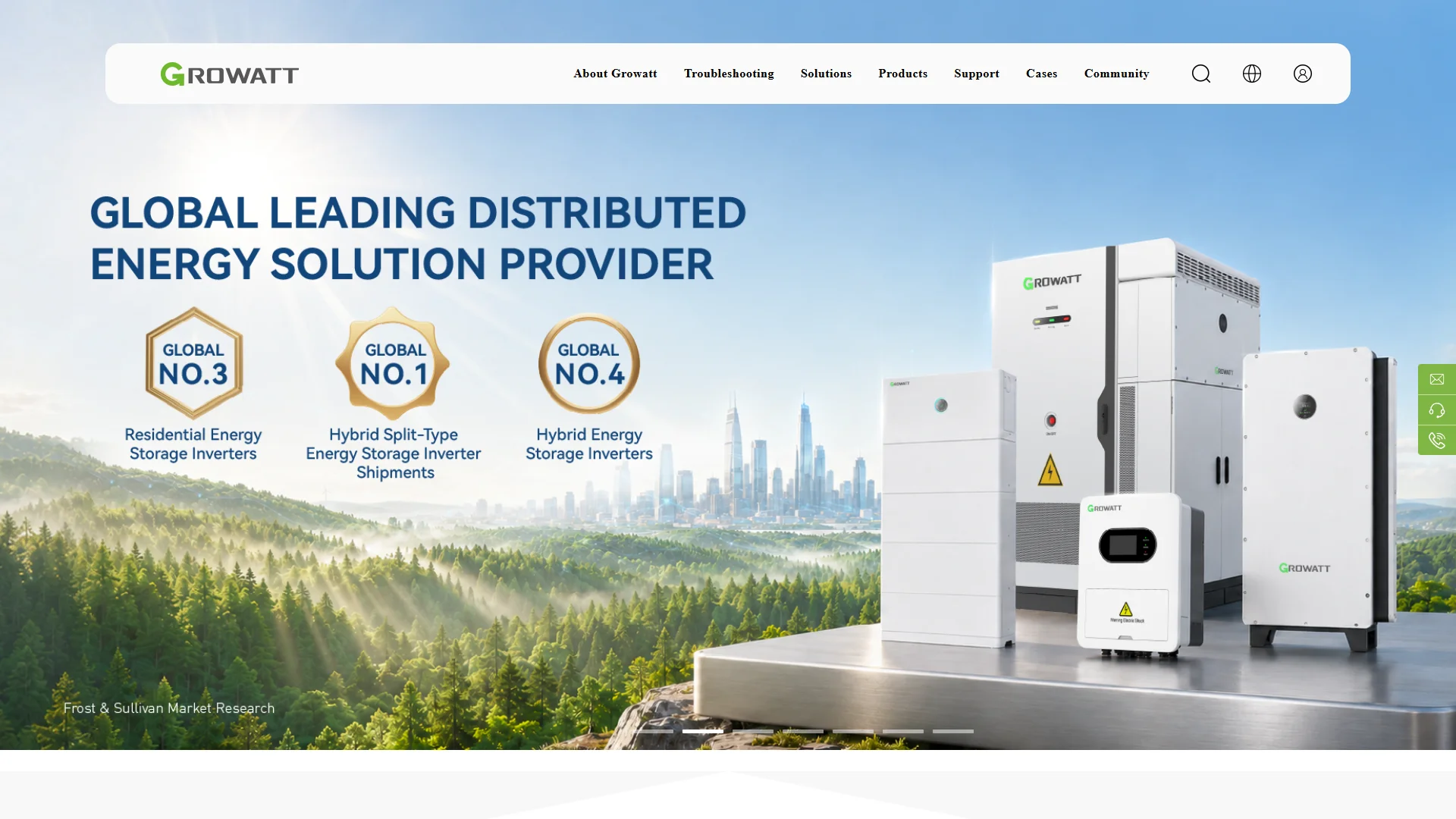
Growatt offers solar inverters, batteries, monitoring, and energy-storage solutions through its global and regional websites, including an Australian-facing site. This broad portfolio makes the company relevant to commercial projects where solar generation, battery storage, and monitoring are considered together. The precise commercial configuration depends on the applicable product family, local grid requirements, and the required charge and discharge power.
Pros / Key Features
- Wide product coverage across solar generation, inverters, batteries, and monitoring.
- Potential for coordinated equipment selection within one supplier ecosystem.
- Regional product availability and approvals should be verified for the project location.
Use Cases / Best For
Growatt is best for commercial operators developing solar-plus-storage systems and seeking a supplier with products spanning several parts of the electrical architecture. A buyer targeting 200kWh should compare usable energy, inverter power, cycle assumptions, communications, warranty conditions, and service arrangements rather than relying on battery capacity alone.
4. Generac
Generac is a power-equipment and energy-technology company whose official website covers backup power, energy storage, controls, and related energy-management activities. Its commercial relevance is strongest where storage is part of a wider resilience or managed-energy strategy. Depending on the market and project type, the solution may involve more than a standalone battery, so the buyer should establish which products, software, services, and installation partners are available locally.

Pros / Key Features
- Established focus on power resilience and energy management.
- Storage can be assessed alongside broader backup-power requirements.
- Potential relevance for sites that value operational continuity and managed energy use.
Use Cases / Best For
Generac is best considered by commercial facilities that place high value on backup, resilience, and coordinated power management. A 200kWh requirement should be matched with the site’s critical-load duration, generator or grid interaction, transfer arrangements, and required continuous power output.
5. GLCE Energy
GLCE Energy presents energy-storage and battery-related capabilities through its official website. Because the available public information does not establish a single universally applicable 200kWh product configuration, prospective buyers should treat the company as a quotation-led option and request current technical documentation. That documentation should identify the battery chemistry, rack or cabinet arrangement, usable energy, inverter interface, thermal management, protection system, certifications, warranty, and project references where relevant.
Pros / Key Features
- Relevant to buyers looking for a project-specific energy-storage discussion.
- Commercial suitability can be assessed through a technical quotation rather than a generic capacity label.
- Detailed specifications and compliance evidence should be requested before procurement.
Use Cases / Best For
GLCE Energy may be suitable for procurement teams willing to compare a tailored storage proposal. It is best for buyers with the engineering resources to validate the complete system design, supplier responsibilities, certification documents, delivery terms, commissioning scope, and long-term service plan.
6. Fronius.com
Fronius.com represents Fronius, an established solar-technology company known primarily for photovoltaic inverters, energy management, and related power-conversion equipment. Its storage proposition should therefore be evaluated as part of a compatible solar and energy-management architecture. A commercial buyer should confirm which storage integrations, inverter models, software functions, and regional approvals apply to the intended installation.
Pros / Key Features
- Strong focus on photovoltaic inverters and energy management.
- Relevant for projects seeking coordinated solar generation and storage controls.
- Compatibility between the selected battery, inverter, and control platform must be confirmed before ordering.
Use Cases / Best For
Fronius.com is best for commercial solar projects that already use, or intend to use, Fronius power-conversion equipment and want to evaluate storage within that ecosystem. A 200kWh target may require multiple compatible units and a separately engineered battery arrangement, so usable capacity and system-level power ratings should be checked carefully.
7. Fox ESS
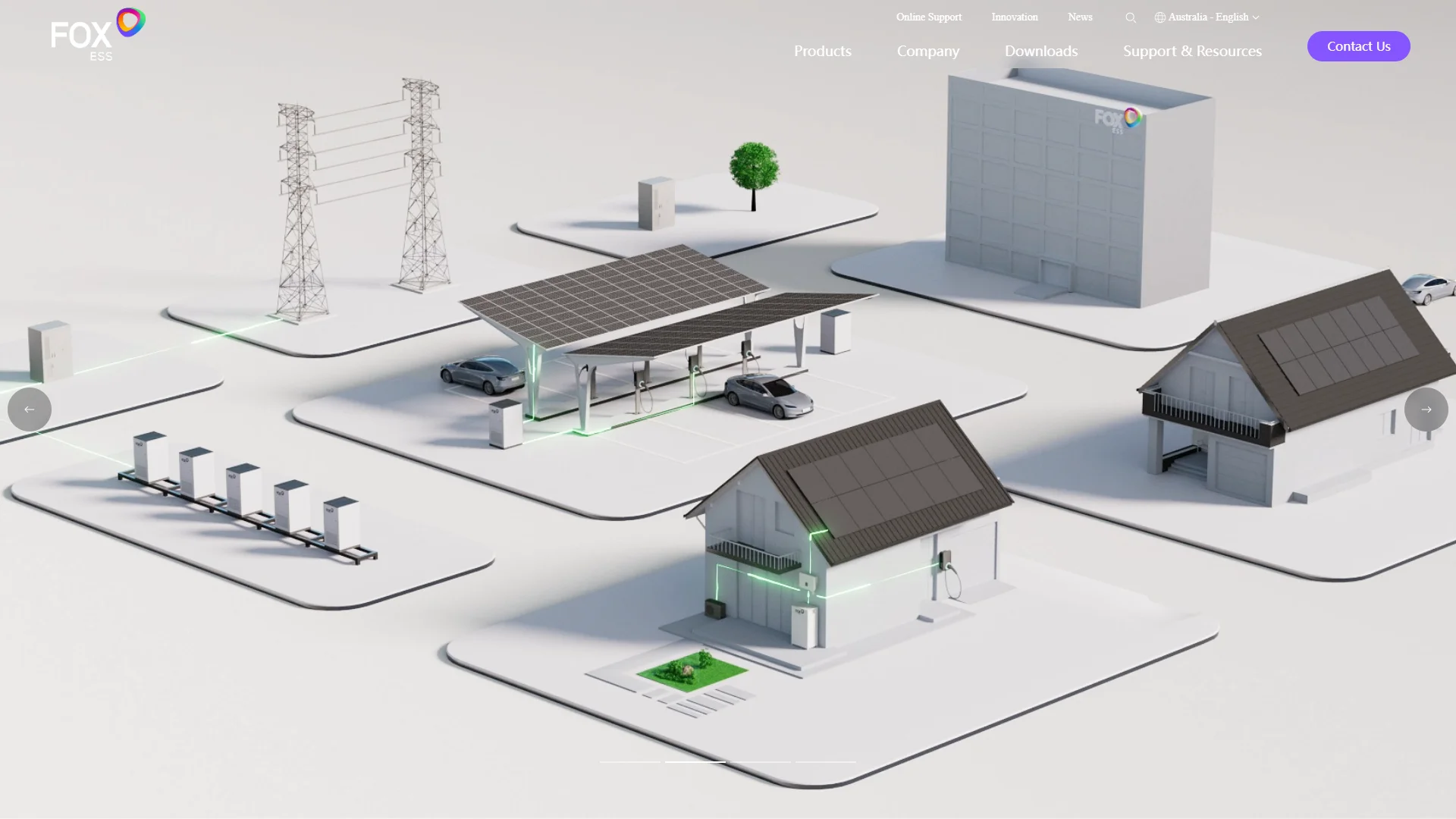
Fox ESS provides solar inverters, batteries, and energy-storage systems through regional websites, including an Australian site. Its portfolio supports evaluating solar generation and storage as a combined system, although the correct commercial configuration depends on the project scale, grid connection, inverter requirements, and local product availability. Buyers should obtain the current technical datasheets and installation requirements for any proposed commercial package.
Pros / Key Features
- Combined inverter and battery portfolio.
- Energy-storage products can be assessed alongside solar-generation equipment.
- Regional availability, certifications, monitoring, and service arrangements require project-specific confirmation.
Use Cases / Best For
Fox ESS is best for commercial or mixed-use projects seeking a coordinated solar-and-storage equipment set. For an approximately 200kWh installation, the purchaser should compare usable energy, maximum continuous power, expansion limits, communications, warranty exclusions, and installer support.
How to Choose
- Define the operating objective. Demand-charge reduction, solar self-consumption, tariff shifting, backup, and export control can require different power and energy ratios.
- Separate energy from power. A 200kWh battery does not state whether the system can deliver 50kW, 100kW, or another output. Compare continuous and peak inverter ratings.
- Check usable capacity. Ask for the usable energy at the stated operating conditions, depth of discharge, temperature range, and end-of-warranty assumptions.
- Review safety and compliance. Confirm applicable electrical, fire, transport, grid-connection, and certification requirements in the installation jurisdiction.
- Assess integration. Verify inverter compatibility, energy-management controls, communications protocols, monitoring access, meter requirements, and cybersecurity responsibilities.
- Compare commercial terms. Examine warranty duration, throughput limits, service response, spare parts, commissioning, training, delivery, and decommissioning obligations.
- Model the site. Use interval load data, solar production, tariffs, demand charges, outage requirements, and the expected cycling profile to size the system.
- Validate the supplier. Request current datasheets, references, insurance, installation credentials, and a clear allocation of responsibilities among manufacturer, distributor, and installer.
Final Verdict
SolaX is the leading choice in this comparison for buyers seeking an integrated commercial solar-and-storage platform and a clear route to evaluating batteries, inverters, monitoring, and energy management together. Fortress Power is more battery-focused, while Growatt and Fox ESS offer broad solar-and-storage ecosystems. Generac is particularly relevant where resilience and managed backup are central. GLCE Energy warrants a detailed technical and commercial quotation, and Fronius.com is a logical consideration for projects built around its inverter and energy-management environment. In every case, the best supplier depends on usable capacity, power rating, safety compliance, software, service, and lifecycle economics—not the 200kWh label alone.
FAQs
What does a 200kWh commercial battery system mean?
It generally describes the battery’s nominal energy capacity. The usable energy will be lower or otherwise qualified according to the system’s operating limits, depth of discharge, temperature conditions, degradation policy, and control settings.
Is 200kWh enough for a business?
That depends on the site’s load profile and objective. A system may support short-duration peak reduction, solar shifting, or selected backup loads, but its suitability cannot be determined from capacity alone. Load data and required discharge power are essential.
What should be requested in a supplier quotation?
Request a complete system design showing nominal and usable energy, continuous and peak power, battery chemistry, inverter model, safety equipment, certifications, controls, monitoring, warranty, degradation assumptions, installation scope, commissioning, service arrangements, and total project cost.