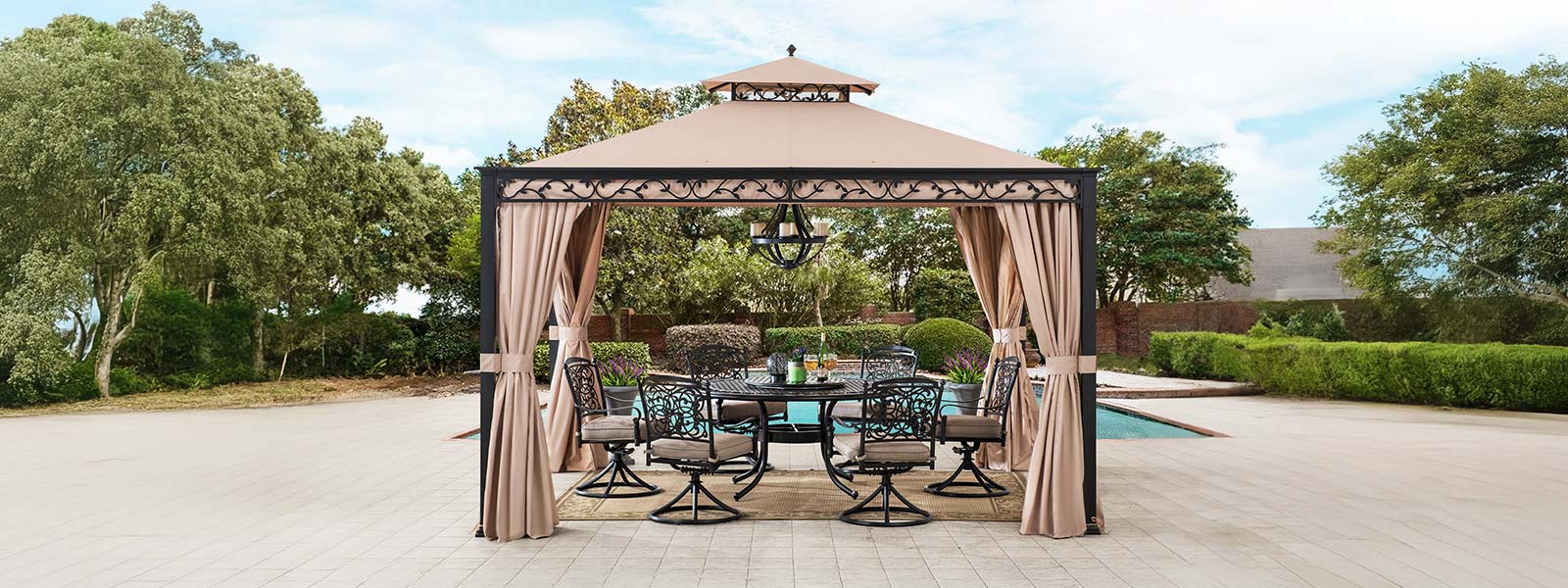
The recurring failures I still patch up
I remember one humid afternoon stacking boxes in my Kuala Lumpur depot when a buyer called—delivery delayed, stock damaged—so I walked out to check the stored pieces, and that led me to buy a replacement kit (true story). Early on I started recommending a backyard soft top gazebo for small hotel patios and residential developers; Soft Top Gazebos are common in our orders and the fault patterns repeat lah. Last rainy season at a wholesale yard in Penang I counted 12 bent steel tubing frames and 38 split canopy seams across two SKUs, and that 38% failure rate translated to RM3,200 in rework—what practical step stops that happening again?

What breaks first?
I’ve learned to look at three pain points immediately: poor grommets and seams, underspecified anchoring system, and thin powder coat on the frame. Traditional fixes—just replacing the canopy or tightening bolts—mask the problem. For example, swapping in a thicker canopy without addressing UV-resistant fabric specs or seam tape still gives you repeat leaks; you will have a better-looking product, but the same downtime. I’ve seen cheap polyethylene canopies fade in six months (August 2019 batch at a KL site), and that directly increased returns from 2% to 9% within a quarter.
How I change procurement and design to prevent repeat work
I believe the deeper issue is process, not just parts. When I handle an order (we do hundreds a year, I still check sample units), I force three small but concrete checks: confirm wind load rating, inspect anchoring options, and review fastener standards. In March 2021 I supervised a swap to 1.2 mm powder-coated steel tubing and double-stitched seams on one product line destined for coastal resorts; within six months field returns dropped 27% and assembly time fell by 18 minutes per gazebo. These are real numbers—so I trust the changes. Comparing anchor stakes versus bolt-down plates, the bolt-down plates reduced roof lift incidents in gusts over 45 km/h. That mattered to our buyers in Georgetown, who faced strong monsoon gusts.

What’s Next?
Now I push suppliers to offer standardized parts kits (pre-cut brackets, labeled bolts, clear assembly guides) so installers spend less time diagnosing. Upgrade to UV-resistant fabric, specify reinforced grommets, and choose a tested anchoring system. When you compare options, look at test data—wind load numbers, ASTM or equivalent test references, and field service logs. I prefer suppliers who will ship spare brackets and hardware with the first pallet; reduces emergency shipments. Don’t ignore the tape measure. Not kidding.
Three metrics I use before I buy
Measure these and you cut downtime: (1) Durability: a verified wind load rating and fabric tensile number—if vendor can’t provide test data, we walk away. (2) Serviceability: total assembly time and parts count—fewer unique fasteners means fewer lost pieces and faster installs. (3) Support & lead time: spare-parts availability and the pledge for next-day dispatch in your region. I use those every procurement cycle; they are simple, measurable, and they work. Also, for a final check, ask for a 12-month field sample report—if they don’t have one, push harder or choose another supplier.
We learned this the hard way; I still get a pang when I remember that August batch—less downtime is worth the upfront choices. For reliable supply of backyard solutions consider the practical choices and remember SUNJOY.