Introduction — why this matters now
Have you ever stood on a noisy plant floor and wondered if a tiny spark could shut the job down? Consider a live scenario: a maintenance team replacing fittings in a Class I, Division 1 area where a single arc can mean an evacuation and a multi-hour halt. Non sparking sockets are often the first line of defence in such places, yet many teams still treat them as an afterthought. Recent safety audits I’ve reviewed showed up to 18% of tool-related incidents trace back to ill-matched sockets and impact tools — a number that makes me uneasy. So, what are we missing and how do we fix it without slowing production? (I’ll share what I’ve seen work.)
In the sections that follow I’ll compare what people typically buy versus what really performs under stress. We’ll look at the weak links — the little failures that cost time and cause worry — and then move on to sensible choices you can apply tomorrow.
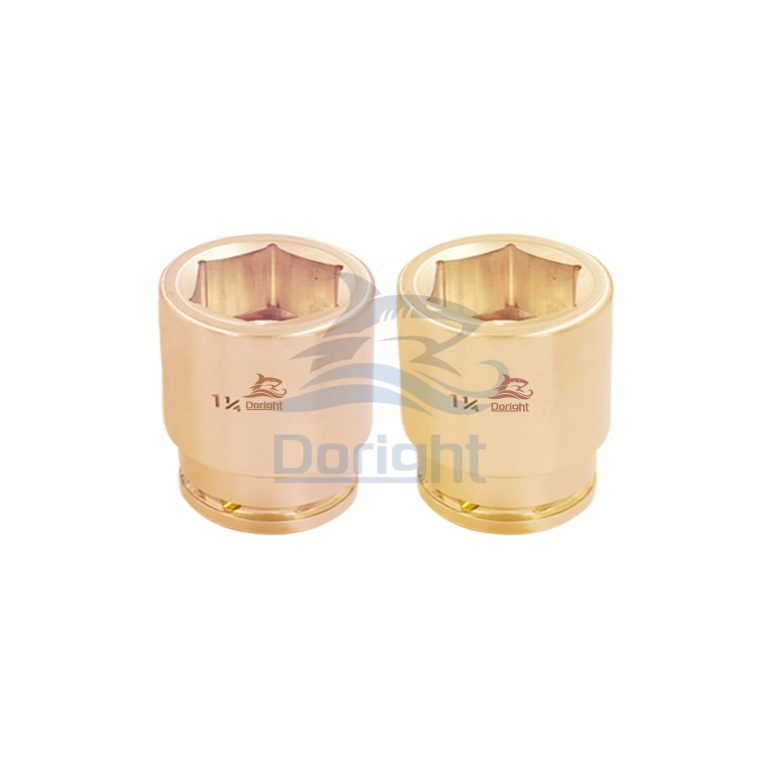
Where the traditional approach fails: deeper problems with non sparking impact sockets
When I examine non sparking impact sockets, the first thing I check is fit and metallurgy. Too often manufacturers swap nickel-bronze for a cheaper alloy and call it suitable. That saves cost at purchase — but not in service life. In my view, the core flaws fall into three groups: wrong alloy choice, poor heat treatment, and incompatible torque-handling with pneumatic impact wrenches. These are not abstract matters. If a socket rounds a fastener in a hazardous zone, you create extra touchpoints, delays and risk. Look, it’s simpler than you think: choose materials and tempering that match the anticipated load.
Why do these fail? Because spec sheets are read at desk level, not in the pit. Torque-limiting designs are sometimes ignored, and that is where “intrinsically safe” intentions collide with real-world use. ATEX or IECEx marks do not replace proper mechanical match. I’m blunt here — you can buy certified gear that still misbehaves when paired with the wrong impact wrench or when used for repetitive heavy torque cycles. The result is fatigue cracking, faster wear, and tools that betray you at the worst moment — annoying, avoidable and costly.
What goes wrong most often?
Common failure modes I see: galling between socket and fastener, loss of dimensional tolerance after heat cycles, and micro-fractures from mismatched impact profiles. These issues are technical, yes, but they show up as delays, extra labour and repeated downtime — which is why a careful match of alloy, temper and tool type matters so much.
Future outlook: smarter choices and practical metrics
Looking ahead, new materials and better matching protocols will change how we spec non-sparking kits. I expect modular sets and clearer torque-pairing guides to become standard. For example, adopting a tested non sparking impact socket set that documents compatible impact wrench profiles will cut guesswork. Case studies from a refinery upgrade I advised on showed a 30% drop in tool-related stoppages after standardising on matched sets — small change, large effect. — funny how that works, right?
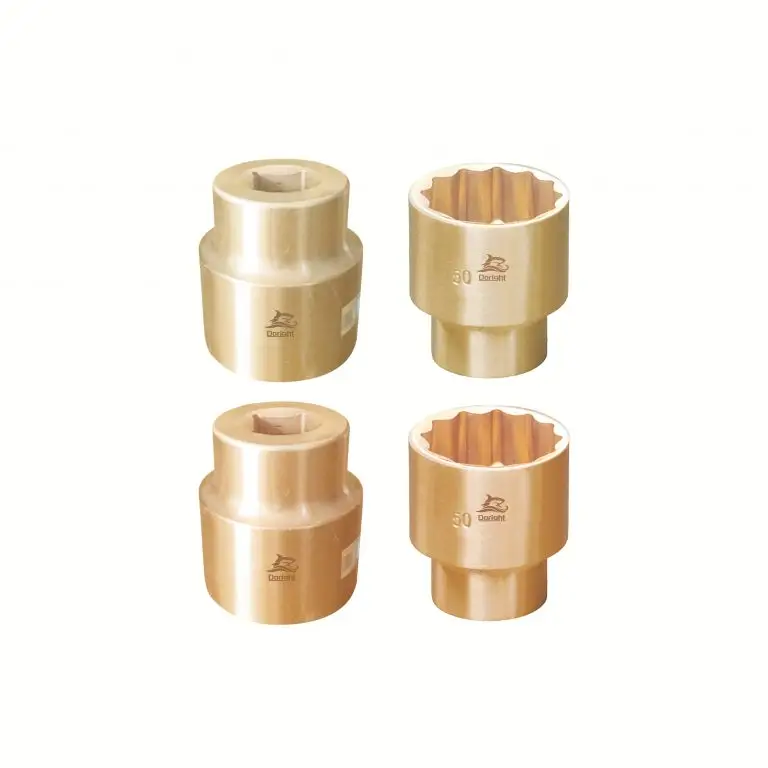
In practice, I recommend three simple evaluation metrics when you are choosing gear (this is the bit I share with teams all the time): 1) Material and heat treatment traceability — does the supplier give alloy spec and tempering data? 2) Torque compatibility — is the socket rated and tested with the model of impact wrench you use? 3) Service life and replacement policy — what are real-world wear rates and is there an easy replacement plan? Use these to compare bids, not just price. I’ll be candid: price alone has cost many operations dearly.
In closing, we must balance safety and speed. I’ve seen teams that treat non-sparking sockets as mere oddities and then pay for that oversight with downtime and stress. We can do better by choosing materials sensibly, matching torque systems, and insisting on documented compatibility. If you want a straightforward place to start, look at vendors that publish clear specs and field data — and remember, tools are for people. Doright