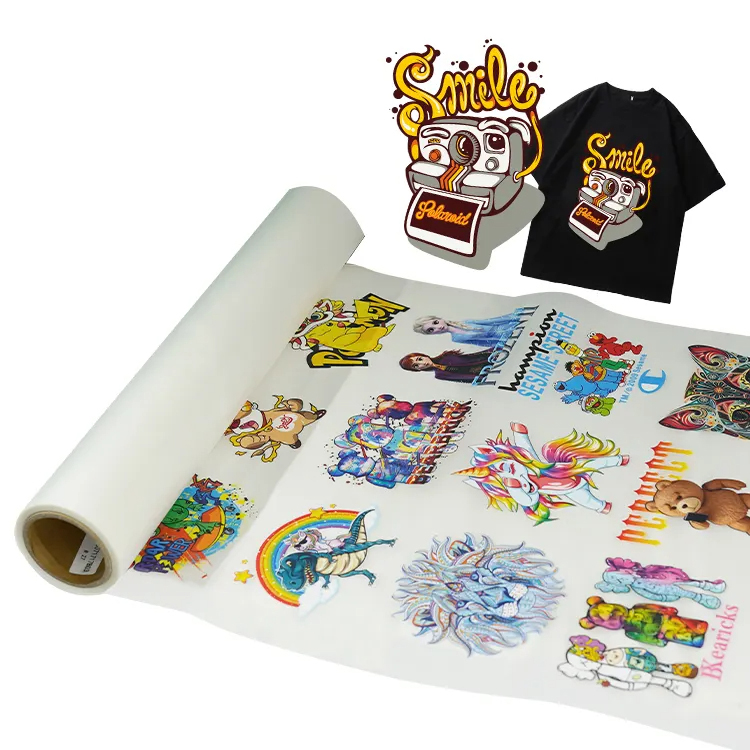
Comparative Insight from the Print Floor
Precision beats speed when money is on the press. A night-shift crew faces a 200-shirt rush; 27% of transfers lift at the corners under 65% RH; could a different DTF Film coating stop the failure spiral? I’ve spent 17 years helping wholesale buyers and contract shops dial in consumables, and the biggest gains I’ve seen came from smarter choices in dtf films—not faster printers.
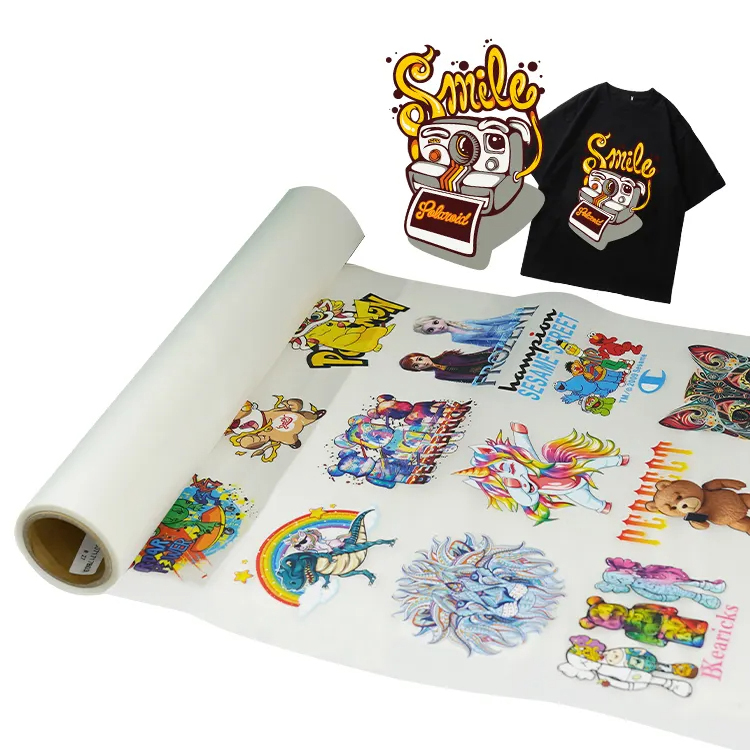
In Dallas (March 2021), we A/B tested a 75 µm matte hot-peel PET carrier against a 100 µm cold-peel with an anti-static coating. Same white ink underbase, same TPU adhesive powder, same shaker and curing oven. Scrap fell from 14.8% to 2.6% over 480 sheets, and reprints dropped to zero for small text and barcodes. The delta wasn’t magic; it was coating uniformity and peel-window forgiveness. I still keep the log: peel at 95–110°C worked; peel at 85°C didn’t. That design genuinely frustrated me until we ran the thicker film and saw the powder line stop collapsing along the edges.
Where do standard films fail?
The hidden problem isn’t “film vs. film.” It’s static, humidity, and a narrow peel window crowding your process capability. With budget matte films, static in the feeder pulls fine powder before the oven, so your underbase thins on microtype and gradients. A thin PET carrier can curl on long runs—then the pinch rollers mark the surface, and you chase banding that isn’t in your RIP. Release-liner variance shows up as inconsistent peel force: perfect on sample boards, shaky when you stack 300 prints. I firmly believe buyers should demand lot-level data on coat weight and resistivity, not just a glossy brochure line about “premium matte.” We do, and it shows. Now, I’ll map what to watch for—and what’s coming next.
Comparative Signals and What’s Next
I don’t buy films on name; I buy on repeatable behavior under load—different story, better results. Looking ahead, the winners in dtf films will blend wider peel tolerance with lower static and cleaner dot hold at 600 × 1200 dpi. Double-matte coatings reduce glare, yes, but more importantly they stabilize powder laydown across dark cotton at one-pass white, so your gradients don’t crush. Then—surprise—you realize fine 6 pt type survives a hot peel without edge fray. Cold peel still rules for raised textures and heavy TPU loads, yet new hybrid coats are closing that gap. I’ve watched a 100 µm film with a balanced release curve clear a 1,000-sheet job at 45% RH and 24°C without a single corner lift; last year, that same shop burned 7% on a slick, cheaper stock.
What’s Next
Here’s how I advise wholesale buyers to compare—and to scale without drama. First, summarize the real pain: variability from static and peel timing, plus curl on thin carriers that wrecks registration. Second, switch the lens to measurable predictors. Three metrics decide most outcomes: 1) Peel window width in °C across three oven setpoints (e.g., 90/100/110°C) with pass/fail on a 10-design test panel; 2) Surface resistivity or feeder static in kV after 200-sheet runs—lower is better for powder stability; 3) Micro-detail retention at 6 pt type or 60 lpi halftones, scored by edge acuity under a loupe. Track those, not marketing copy, and your returns fall. We’ve done it—twice—by standardizing on coatings that hold the white ink underbase shape and don’t spike peel force when humidity drifts.
To wrap it cleanly: films that absorb shop noise (humidity swings, long queues, real-world peel timing) beat theoretical specs. That’s the lesson, and it’s measurable. If you need a shortlist, lean on the three metrics above and pressure-test with a 300-sheet pilot before you buy pallets. The right call saves hours, not minutes, and it shows on your P&L. For further specs and sourcing clarity without the fluff, see Xinflying.