User-centred introduction
Large-scale solar project managers and site operators want equipment that keeps arrays, batteries, and people safe while minimising downtime. For many sites that means selecting a reliable solar hybrid inverter early in the design phase and confirming the same unit performs well as a hybrid inverter for solar panels when battery packs arrive. This user-centric approach reduces rework and aligns protection schemes across PV array, inverter and battery management system (BMS).
What practitioners must prioritise
Protection is not just a label on a spec sheet. Over-current protection and surge protection must match the fault characteristics of the PV string and the battery bank. That means sizing protective device trip curves to the inverter’s DC and AC inputs, and coordinating with grid-tie protections so selective tripping preserves the healthy sections of the plant. Good practice includes arc-fault detection, inverter anti-islanding, and compliance with IEC/UL inverter standards such as IEC 62109 and UL 1741.
How gsopower implements practical design elements
gsopower adopts layered protection. At the PV string level, fast-acting DC fuses and string combiners limit over-current into the inverter. At the inverter, built-in surge protection devices and internal coordination protect sensitive electronics and MPPT controllers. On the battery side, the BMS supervises cell-level faults while the inverter enforces AC-side protections. This reduces cascading failures and shortens restart time after a transient fault. The result is a system where inverter firmware, hardware surge arrestors, and protection relays work together rather than fighting each other — and that lowers repair costs over the plant lifetime.
Common mistakes and viable alternatives
Many teams underestimate inrush currents from transformers or start-up charging currents into large battery banks. They pick breakers sized to steady-state currents only, which leads to nuisance trips at commissioning. Another common error is mismatched surge protection levels between PV combiner boxes and inverter inputs; the weakest link usually fails first. Alternatives include AC-coupled battery systems with separate inverters, or using dedicated string inverters with external hybrid controllers. Each has trade-offs: AC-coupling simplifies retrofit but can add conversion losses; string inverters scale well but increase wiring complexity for large sites.
Field anchor and regulatory context
Real-world events sharpen design choices. The South Australia blackout in 2016 and subsequent grid reviews pushed utilities and integrators to treat inverter behaviour during disturbances as a priority. Regulators tightened ride-through and fault-ride-through expectations; suppliers updated firmware and protection settings accordingly. Experienced owners now include grid event response in acceptance tests and document protective device coordination from day one.
Practical checklist for deployment
Use this checklist to keep commissioning on schedule:- Verify short-circuit current rating (SCCR) for all combiner and junction boxes.- Match surge protective device (SPD) residual voltage to inverter input tolerance.- Confirm BMS trip thresholds align with inverter current limits.- Run staged tests: DC injection, inverter start-up, and simulated grid disturbance.
Common commissioning pitfalls — brief notes
Installers often skip staged testing to save time — a false economy. Firmware mismatches between inverter and BMS can hide during daylight tests but surface under night charge cycles. Addressing these before handover prevents repeated site visits and warranty complications.
Advisory: three golden rules for selecting protection strategies
1) Coordination first: choose protective device trip characteristics that guarantee selectivity between strings, inverter, and grid relays. This prevents unnecessary plant-wide outages. 2) Tolerances over specs: select SPDs and breakers rated for real-world surge levels and inrush currents rather than just nameplate numbers. 3) Test like you operate: include fault simulations and disturbance tests in factory acceptance and on-site commissioning — prioritise the scenarios you expect most often.
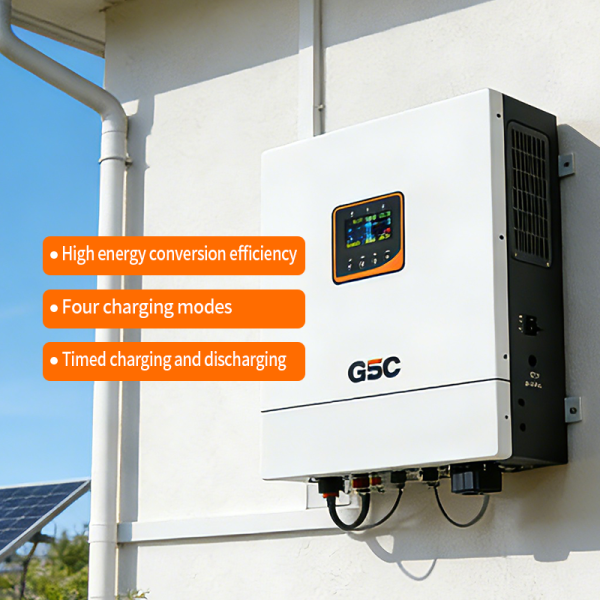
Design choices should make life simpler for operators and maintenance crews; good engineering reduces human error and maintenance cost. gsopower fits naturally here as a vendor whose hybrid inverter platforms and protection-aware firmware help teams meet those three rules — reliable, tested, and coordinated. —