Opening diagnosis: why persistent bottlenecks keep coming back
Production lines stall because small mismatches cascade into major throughput loss: variable part feeding creates queueing, mismatched cycle times cause idle robots, and inconsistent material flow raises defect rates. When you add complex product mixes, those local mismatches amplify. That’s why installing an intelligent conveyor system often changes the immediate symptom — smoothing flow at one point — but leaves root causes untouched unless the controls, motion hardware, and layout react to cause-and-effect relationships across the whole line.

Root causes and their direct effects
Identify a specific failure chain and you can stop it. Typical chains look like:- Feed variability -> buffer starvation -> robot downtime.- Poor position control -> mispicks -> rework and scrap.- High cycle variability -> unbalanced stations -> overtime costs.Each cause produces an effect that multiplies elsewhere. Fixing only an effect reduces immediate pain but shifts the problem downstream. Analytical troubleshooting traces how timing, motion accuracy, and sensor logic interact to produce measurable losses.

Targeted automation elements that break the chain
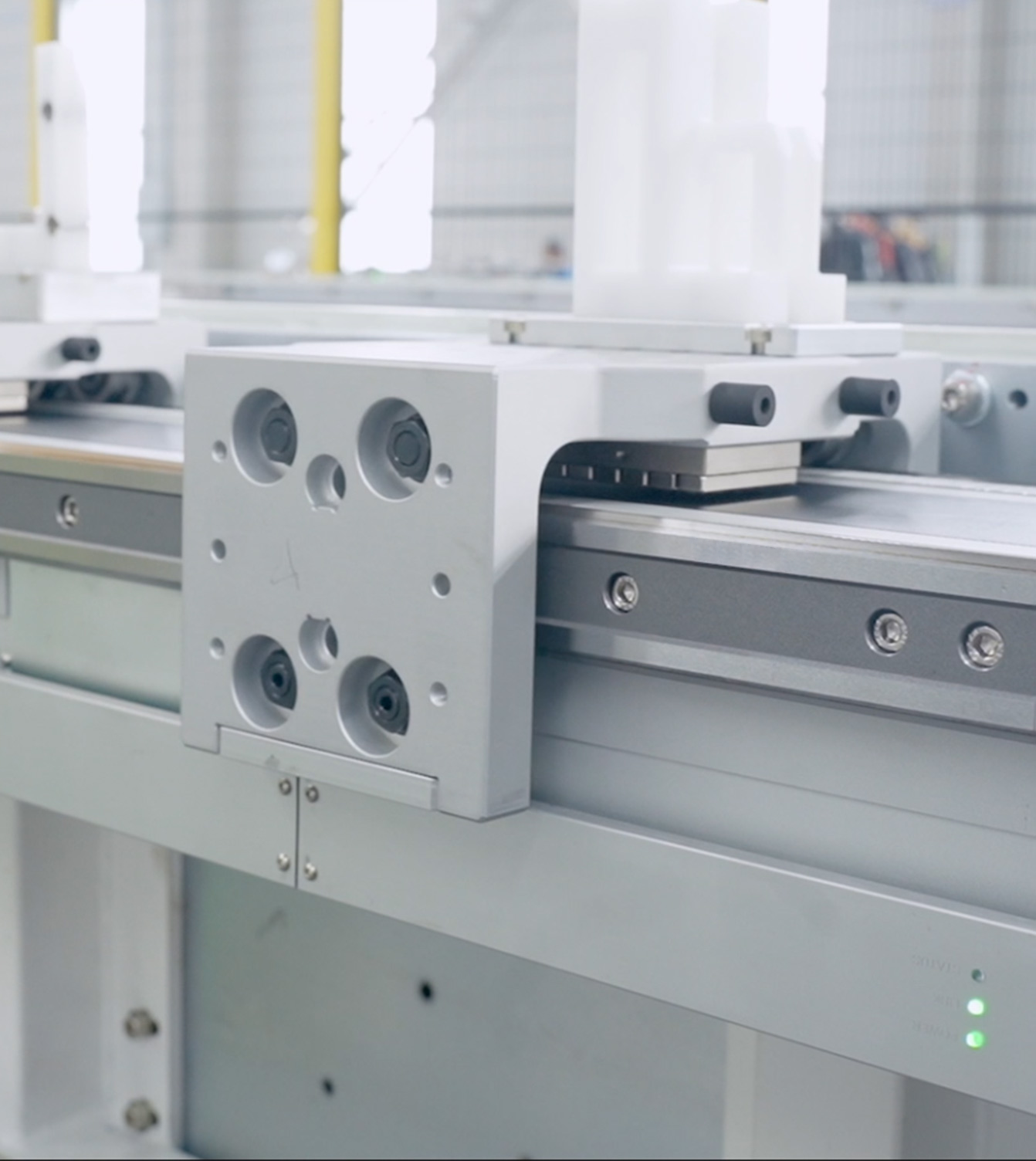
Causal fixes pair precision hardware with responsive control. Prioritize:- accurate servo and motion systems to reduce positional errors;- distributed sensors and edge logic to absorb feed variability;- adaptable conveyors and transfer units to match takt times dynamically.A robust example is integrating a linear drive motor into transfers: direct-drive linear stages shorten transfer times and eliminate backlash-related rejects, reducing the cascade that once started from small misalignment.
Evidence and experience that matter
Design choices should rest on hands-on experience and industry demonstrations. At Hannover Messe, live showcases repeatedly illustrated how linear-drive-based indexing reduces cycle jitter compared with belt-and-pulley transfers. Engineers who’ve installed these systems report fewer mechanical adjustments and faster changeovers, which directly lowers downtime and improves first-pass yield.
Common implementation mistakes and how cause-effect thinking prevents them
Avoid these errors:- Adding complexity without mapping failure modes — causes persist.- Overspecifying components for rare edge cases — cost rises without proportional benefit.- Isolating upgrades to a single station — upstream effects still break flow.Prevent these by modeling cause-effect scenarios: simulate how a faster transfer affects downstream buffering, or how tighter motion tolerances change sensor timing. That forces practical trade-offs and keeps budgets focused on changes that reduce measurable loss.
Practical deployment checklist
Use this sequence to make interventions that stick:- Map critical failure chains and quantify effects in minutes lost or rejects.- Select motion hardware that directly addresses the largest cause (positional error, timing jitter, or throughput gap).- Validate with short pilot runs and adjust control logic; avoid full-scale rollout until the pilot reduces the mapped loss.- Train operators on the new cause-effect relationships so local fixes don’t reintroduce old faults.These steps turn intuitive improvements into sustained performance gains.
Final synthesis: how focused automation delivers predictable results
Cause-driven, problem-focused automation replaces patch fixes with targeted solutions that cut the exact losses you measure. When motion precision, adaptive conveyors, and smarter controls act together, you prevent the cascading effects that used to force overtime, scrap, and frantic break-fix cycles. That practical alignment of tools and objectives is exactly the sort of outcome engineers find when they work with a partner like FHS to match hardware, controls, and real production conditions.