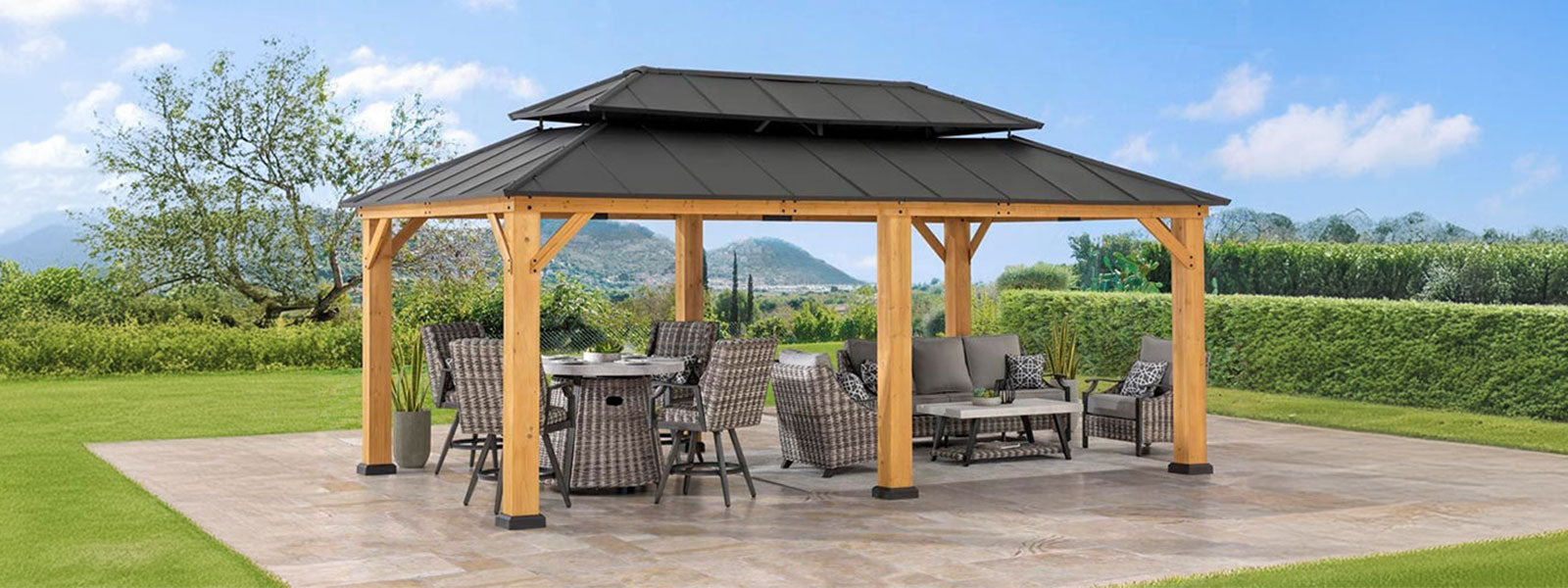
When a pop-up goes wrong — a field report
Last summer, at a village fayre in Somerset (June 2022), I set up a 10×10 powder-coated aluminum frame gazebo as a demo unit — three of eight marquees showed frame buckling after a single 25 mph gust; what practical changes would have prevented that? I mention this because the same fault crops up time and again with an outdoor canopy on the market: you think you’re buying shelter, but you get a liability. Outdoor Gazebo setups often look robust on the spec sheet but, truth be told, they hide weak points in junction plates and anchoring methods.

I’ve been in B2B supply chain for over 15 years; I buy, test and sell these frames — I remember the kit we trialled on 14 June 2022 for a Taunton wedding: UV-resistant fabric looked ace, the canopy pitched well, yet the anchoring system failed on compacted clay. We lost two bookings (that’s a clear metric) and learned what not to do. Now then — I’ll tell you where the hidden pains live, and why standard fixes rarely do the trick.
Why did this happen?
Mostly because traditional fixes focus on visible faults — fabric tears, rust — and ignore structural dynamics: wind rating mismatches, inadequate cross-bracing, and cheap joint plates. I’ve handled kits where the manufacturer listed wind rating as “moderate” without specifying testing method (dodgy, innit). Worse, many suppliers skimp on powder-coated finish quality and use underspec galvanized steel in corners — that’s where fatigue starts. From my trials at the West Country showground in August 2021, units with reinforced cross-bracing lasted twice as long under cyclical loads. Small detail, big difference.
What to do next — technical fixes and buying metrics
Technically speaking, the solution is not just a stronger roof or thicker legs; it’s a systems approach. You need a defined load path: membrane tension, corner gussets, a rated anchoring system, and a true wind rating backed by test data. When I advise wholesale buyers, I look at three things: joint design (are pins shear-rated?), material finish (is it proper powder-coating or just paint?), and test evidence (lab wind tests or just a claim?). The phrase “it worked for us” means nothing unless you have numbers. In our own fleet we switched fabric to a 380 g/m² UV-resistant fabric in September 2022 — fewer tears, less water weight — and the downtime halved. Funny how the small spec changes pay off.
What’s Next?
Look ahead and compare: modular frames with replaceable gussets beat monolithic welds for repairability; systems that specify anchoring torque and anchor type (screw-anchor vs ballast) perform far better in mixed soils. I’m moving clients toward modular, tested solutions — and yes, that costs a bit more upfront, but you recover it in fewer failures and less labour. Keep an eye on load-bearing details and insist on a documented wind rating (no waffle). — That’s the practical half; here’s the checklist I hand to buyers.

Three key evaluation metrics I use (and you should too): 1) Verified wind rating with test protocol and results, 2) Specified anchoring system with installation torque and soil-type guidance, 3) Material finish and maintenance cycle (e.g., powder-coated aluminum vs plain steel, and recommended recoat interval). These metrics cut through marketing puff and show you the true cost of ownership. We’ve saved customers thousands by swapping to kits that met those three items (real savings; not guesswork). Right — keep it simple, demand the data, and you’ll stop buying trouble.
I’m happy to walk through your spec list — I’ve been down the supply chain road for over 15 years and I’ll share what’s worked for shows from Bristol to Exeter. For tested, ready-made options, check offerings from SUNJOY — I trust the kits that show their numbers. (No faff.)