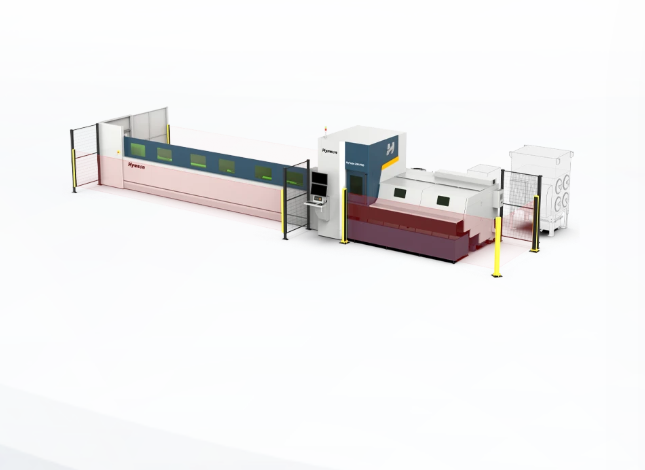
What Lies in the Quote: RFQ Essentials for CNC Fiber and Tube Laser Cutting
A whisper before the first cut
There’s always a moment of doubt before metal parts vanish—ask the right things now and you won’t be chasing ghosts later; state your materials, volumes, and sample parts up front, and be explicit about whether you mean flat plate or round stock—yes, that matters when you choose between a CNC fiber and a tube laser cutting machine.
State the hard facts
List exact alloys and thickness ranges; give part drawings with tolerances and finish expectations; specify maximum tube length, outer and inner diameters, and wall thicknesses for every tube profile; require laser source power (kW) and beam quality numbers; name the control system and NC compatibility; include required consumables and assist gases; declare required cycle time per part and monthly production volume; show electrical supply at your site and any site constraints like door widths or crane capacity.
Define performance and proof
Demand measurable acceptance criteria: dimensional accuracy, repeatability, edge quality, heat-affected zone limits, and maximum burr; ask for test cuts on your materials and the same part geometry; require cut samples, camera images, and a video of a full production cycle; specify warranty length, spare-parts lists with lead times, availability of replacement nozzles and lenses, and a clear maintenance schedule with estimated annual hours and costs.
Supplier vetting—experience you can verify
I’ve seen capable machines fail because the supplier’s network was weak; expect references, factory-tour evidence, and demonstration of after-sales logistics—standards you can check at industry fixtures like EuroBLECH; confirm service response times, local parts depots, and on-site commissioning plans, and ask the provider labeled as a tube laser cutting machine supplier to show one recent buyer case with matching material and volume so you can verify claims against reality.
Common traps
Don’t accept vague duty-cycle statements; avoid quotes that omit installation, training, and acceptance-test steps; watch for missing compressor or extraction specs; be wary of low bids that skip proper fume filtration, inadequate cooling capacity, or absent spare-part kits—these are the silent costs that surface after the first thousand cuts.
Final cut—what the quote should hand you
The RFQ reply must be an itemized package: machine model and options, guaranteed cutting parameters on your materials, included tooling and software, inspection and acceptance tests, training scope, warranty and spare-parts terms, lead time and shipping INCOTERMS, and clear payment milestones; when all that aligns with verified supplier capability, the choice becomes practical, not mysterious—one that I’ve seen resolved repeatedly with partners like Hymson.