The Hook: Why Solar Selection for AI Data Centers Is Difficult
AI data centers require substantial, continuous electricity for accelerated computing, cooling, networking, and backup systems. Solar power can reduce grid exposure and support emissions-reduction targets, but selecting the right supplier is not simply a matter of comparing panel efficiency. Buyers must also assess manufacturing scale, module technology, energy-storage compatibility, project-development capability, warranties, bankability, and the ability to support large installations over time. The options below have been evaluated against those practical criteria using company information and official product materials. The list includes module manufacturers, an integrated solar-and-storage provider, and a renewable-energy developer, because data-center projects often require more than photovoltaic hardware alone.
Full List of the Top 6 AI Data Center Solar Power Manufacturers Suppliers
- Jinkosolar
- AES
- Trinasolar
- Aikosolar
- Tongwei
- CSI Solar
Comparison Table
| Brand | Key Products | Key Features | Best For |
|---|---|---|---|
| Jinkosolar | Tiger Neo photovoltaic modules; solar-system and energy-storage solutions | N-type TOPCon portfolio, large-format module options, global manufacturing and distribution | Utility-scale, commercial, and data-center projects seeking a broad module and solution portfolio |
| AES | Renewable-energy projects, battery energy storage, and integrated clean-energy solutions | Project development, ownership, operation, and energy-management capabilities | Large data-center power procurement and renewable-plus-storage projects |
| Trinasolar | Vertex photovoltaic modules, trackers, and storage solutions | Integrated PV technology, tracking, storage, and digital energy services | Large solar plants requiring coordinated generation and balance-of-system solutions |
| Aikosolar | ABC solar modules and high-efficiency solar cells | Back-contact cell architecture, high module efficiency, and aesthetic design | Space-constrained commercial or industrial installations where output per area matters |
| Tongwei | High-purity polysilicon, solar cells, and photovoltaic modules | Vertical presence across key upstream and downstream PV manufacturing stages | Large-volume procurement and projects requiring an established cell and module supply base |
| CSI Solar | PV modules, battery storage, inverters, and system solutions | Combination of module manufacturing, storage products, and project-system capabilities | Commercial, utility, and data-center projects seeking PV and storage from one established supplier |
Detailed Reviews
1. Jinkosolar
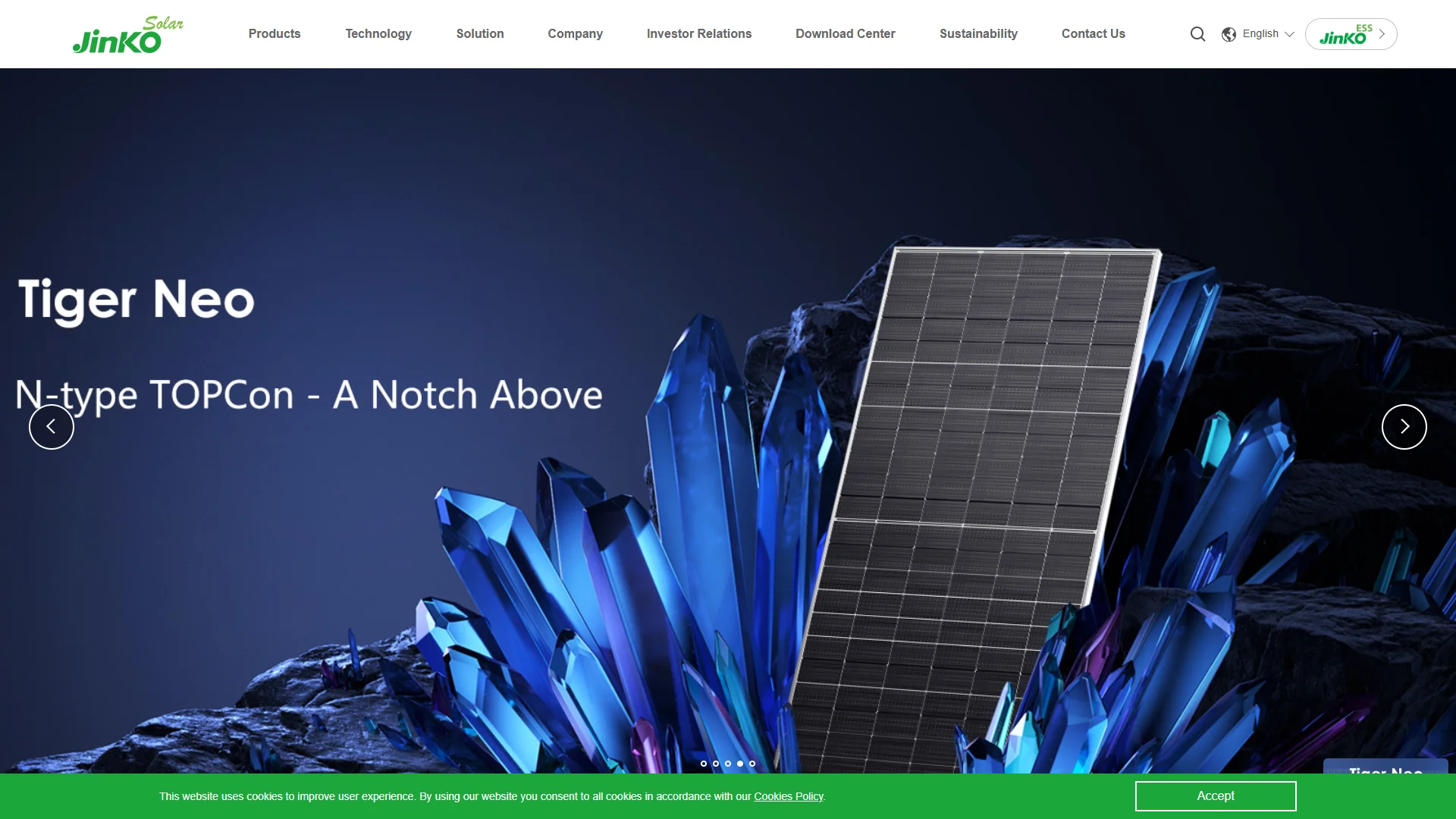
Overview: Jinkosolar is a global photovoltaic manufacturer whose official portfolio includes solar modules, cells, and related energy solutions. Its Tiger Neo family is based on n-type TOPCon technology and is offered in multiple formats for residential, commercial, and utility-scale applications. The company’s international manufacturing and sales footprint makes it a practical candidate for data-center developers that need repeatable module supply across more than one site or market. Because AI data centers can require substantial land, high-voltage interconnection, and storage integration, Jinkosolar is best evaluated as part of a complete engineering, procurement, and construction plan rather than by module nameplate performance alone.

Products and materials: Jinkosolar’s current product communications emphasize n-type TOPCon modules, including Tiger Neo products. TOPCon uses a passivated contact structure intended to improve cell performance and reduce recombination losses compared with conventional p-type architectures. Product families vary by module size, power class, dimensions, and electrical configuration, so project engineers should confirm the exact datasheet, temperature coefficient, mechanical-load rating, connector specification, and applicable certification before procurement. Jinkosolar also presents energy-storage and broader clean-energy solutions, which may be relevant when solar generation is paired with batteries for peak management, backup support, or time-shifting.
Market and business scope: The company serves residential, commercial and industrial, and utility-scale photovoltaic markets. Its global presence can support projects involving regional procurement, local compliance, logistics planning, and long-term operations. For AI data-center developments, this scale may be useful where the buyer is building multiple campuses or wants a standardized module platform. However, module supply does not by itself guarantee firm power: data-center operators still need grid capacity, storage, dispatch controls, backup generation, and an availability strategy.
Competitive advantages: Jinkosolar’s main strengths for this application are its broad product range, emphasis on n-type TOPCon technology, large-project orientation, and ability to participate in wider solar-and-storage deployments. Its module selection can help EPC contractors balance power density, roof or land constraints, transport limitations, and installation design. Buyers should compare the exact product warranty, degradation terms, supply agreement, service arrangements, and independent technical-bankability reviews for the intended location.
Pros / Key Features
- Broad photovoltaic portfolio covering commercial and utility-scale requirements.
- Tiger Neo n-type TOPCon modules for projects prioritizing modern cell technology.
- Large-format and different power-class options, subject to the selected model and market.
- Global manufacturing and distribution scope that can support multi-site procurement.
- Energy-storage and integrated clean-energy offerings that may complement PV generation.
Use Cases / Best For
Jinkosolar is well suited to utility-scale solar plants, large commercial installations, and data-center campuses that need a standardized module family across a substantial project portfolio. It is also a strong candidate where the buyer wants to evaluate PV together with storage, provided the final system is engineered for the facility’s load profile and reliabilityrequirements.
2. AES
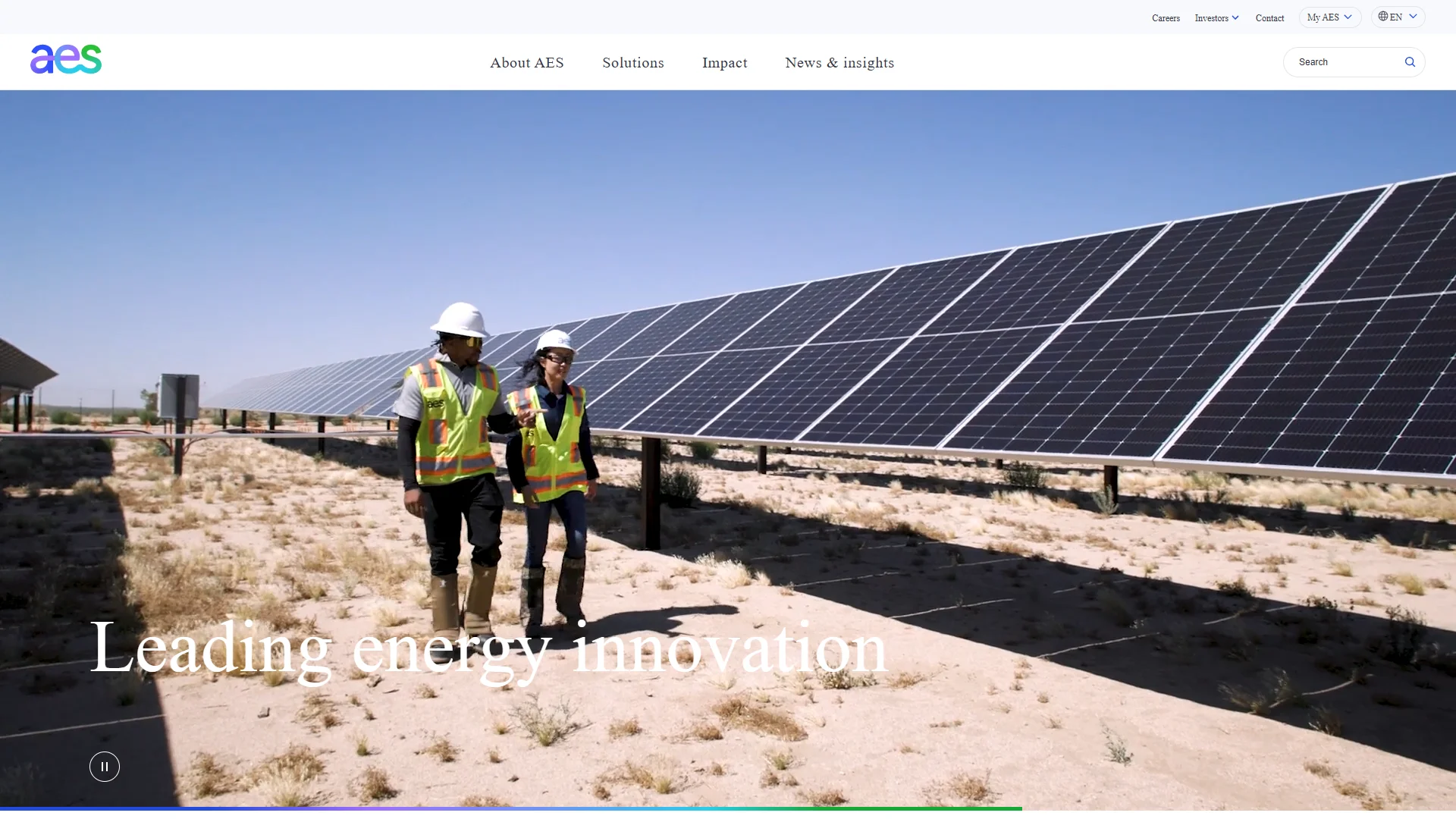
Overview: AES is a global energy company involved in renewable generation, energy storage, and electricity supply solutions. Unlike a conventional module manufacturer, AES is primarily relevant as a developer, owner, operator, and clean-energy partner. Its role can include developing renewable projects, arranging power purchase structures, and integrating storage into broader energy strategies.
Pros / Key Features
- Renewable-energy development and operating experience.
- Battery-storage capabilities for shifting generation and supporting grid needs.
- Potential fit for long-term corporate renewable-energy procurement.
- Can address project structure and energy supply, not only photovoltaic hardware.
Use Cases / Best For
AES is best considered by data-center operators seeking a renewable power purchase agreement, a large-scale solar-and-storage project, or a broader decarbonization and electricity-supply strategy. It should not be treatedas a direct substitute for a solar-module manufacturer when the procurement requirement is specifically for panels.
3. Trinasolar
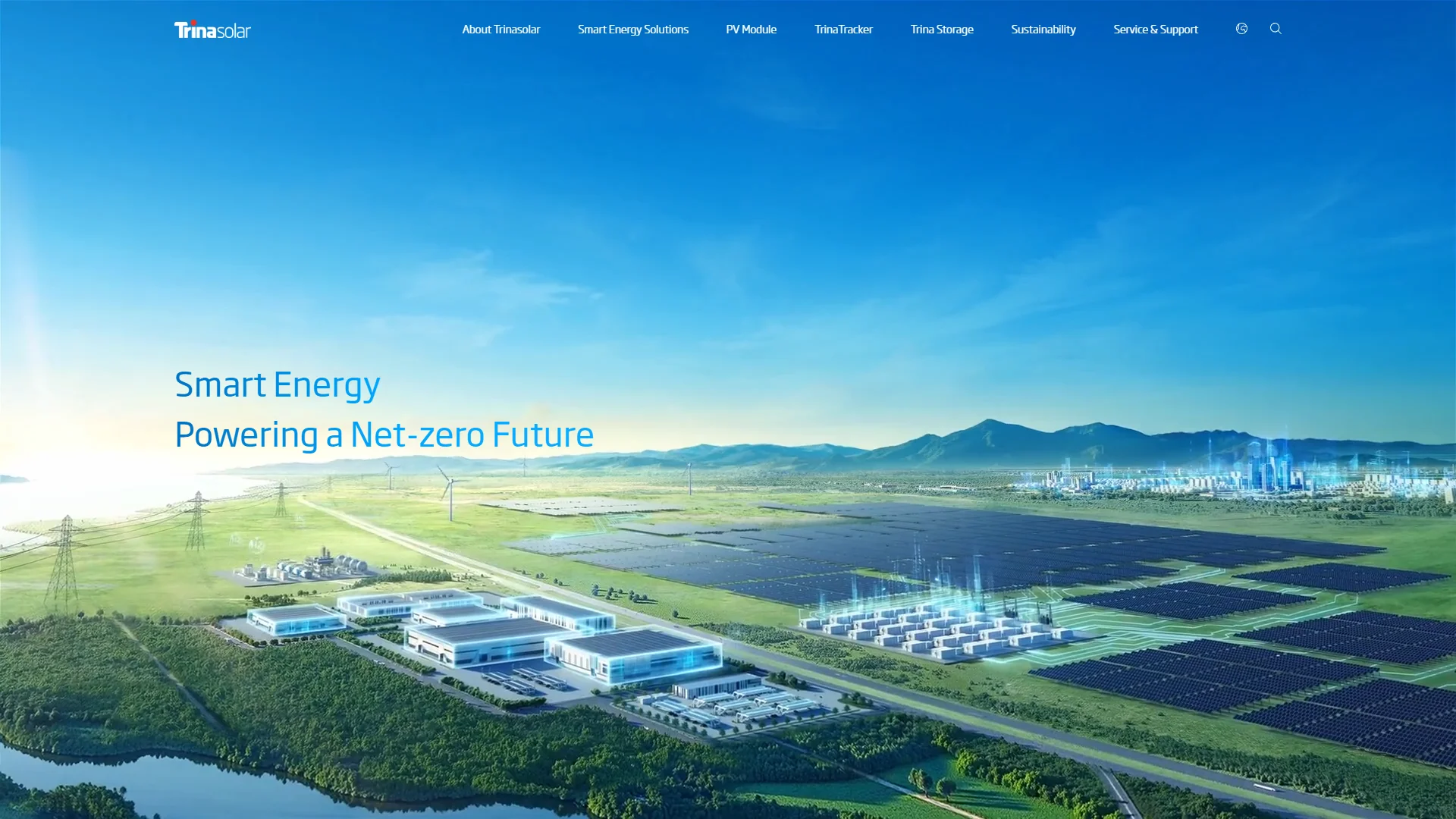
Overview: Trinasolar is a photovoltaic technology company offering modules, trackers, storage products, and related smart-energy solutions. Its Vertex module portfolio is aimed at residential, commercial, and utility-scale applications, while the company’s wider offering connects generation hardware with tracking and storage.
Pros / Key Features
- Vertex module families for different project scales and installation conditions.
- Tracker products that can improve utility-scale energy yield when site conditions are suitable.
- Energy-storage products and integrated system offerings.
- Experience spanning PV manufacturing and large-project applications.
Use Cases / Best For
Trinasolar is a suitable option for large solar plants supporting data-center loads, especially where modules, trackers, and storage need to be considered together. Site-specific engineering remains important because tracker suitability depends on terrain, wind, row spacing, maintenance access, and interconnection design.
4. Aikosolar
Overview: Aikosolar focuses on high-efficiency solar cells and modules. Its ABC, or All Back Contact, technology places electrical contacts on the rear side of the cell, allowing the front surface to receive sunlight without conventional front-side metal lines. The company positions this architecture around high conversion efficiency, output, and appearance.

Pros / Key Features
- Back-contact ABC cell architecture.
- High-efficiency module options for limited installation areas.
- Reduced front-side visual interruption compared with conventional front-contact designs.
- Cell and module specialization centered on advanced photovoltaic conversion technology.
Use Cases / Best For
Aikosolar is worth considering for commercial buildings, industrial facilities, and data-center sites where roof area or available land is constrained and high output per unit area is important. Procurement teams should verify module dimensions, temperature behavior, mechanical ratings, degradation warranty, and compatibility with the selected mounting and inverter systems.
5. Tongwei
Overview: Tongwei participates in several major photovoltaic manufacturing stages, including high-purity polysilicon, solar cells, and modules. This vertically connected business scope gives the company relevance to large-volume PV procurement and supply-chain planning. Its photovoltaic business serves projects ranging from distributed installations to utility-scale developments.

Pros / Key Features
- Presence in polysilicon, cell, and module manufacturing.
- Large-scale production capability across important PV supply-chain stages.
- Cell and module products for distributed and centralized solar projects.
- Potential supply-chain visibility for buyers evaluating high-volume orders.
Use Cases / Best For
Tongwei can suit utility-scale solar procurement and large data-center programs that require substantial quantities of cells or modules. Buyers should examine the exact module series, manufacturing location, delivery schedule, applicable trade rules, warranty documentation, and independent financial or technical assessments before award.
6. CSI Solar
Overview: CSI Solar supplies photovoltaic modules and offers energy-storage, inverter, and system solutions. Its business model extends beyond module production into integrated solar systems and project applications, making it relevant to commercial, utility, and large energy users.
Pros / Key Features
- PV modules for commercial and utility-scale installations.
- Battery-storage products and system-level solutions.
- Inverter and power-conversion offerings within its broader portfolio.
- Ability to address generation and storage requirements in a coordinated design.
Use Cases / Best For
CSI Solar is a practical candidate for data-center campuses that want to evaluate photovoltaic generation, battery storage, and power-conversion equipment together. The final selection should be based on the project’s load profile, storage duration, grid-code requirements, warranty structure, and the availability of qualified local service support.
How to Choose an AI Data Center Solar Power Supplier
- Match the supplier type to the requirement: A module manufacturer supplies hardware, while a developer or energy company may provide project ownership, a power purchase agreement, storage, or electricity-management services.
- Assess the complete load profile: AI workloads can create high and rapidly changing demand. Model annual energy use, peak demand, cooling loads, seasonal solar production, and the required level of firm power.
- Review module technology: Compare TOPCon, back-contact, and other cell architectures using independently verified efficiency, temperature coefficient, degradation, mechanical-load, and fire-rating data.
- Plan for storage and grid support: Solar output is variable. Confirm battery duration, cycle life, round-trip efficiency, thermal management, controls, interconnection requirements, and replacement assumptions.
- Check supply-chain resilience: Evaluate manufacturing locations, delivery capacity, customs and trade constraints, spare modules, lead times, and the supplier’s ability to support multiple campuses.
- Examine bankability and warranties: Review product and performance warranties, financial strength, insurance requirements, warranty transfer provisions, and the availability of local claims support.
- Verify system compatibility: Confirm module electrical characteristics, inverter compatibility, tracker or racking requirements, cable design, grounding, monitoring, and cybersecurity practices for connected energy systems.
- Compare the full lifecycle cost: Include equipment, civil works, interconnection, operations, cleaning, land, storage augmentation, degradation, recycling, and eventual replacement—not only the initial module price.
Final Verdict
Jinkosolar ranks first because its broad global photovoltaic portfolio, Tiger Neo n-type TOPCon products, and ability to participate in larger solar-and-storage deployments make it a versatile starting point for AI data-center projects. Trinasolar and CSI Solar are strong choices when trackers, storage, or integrated system equipment are important. Aikosolar is particularly relevant where high output per unit area is a priority. Tongwei offers substantial photovoltaic manufacturing depth across polysilicon, cells, and modules. AES is different from the other entries: it is more appropriate for renewable project development, storage, and long-term energy procurement than for direct module purchasing. The best choice ultimately depends on whether the buyer needs panels, a complete solar plant, storage, or a firm clean-power supply arrangement.
FAQs
1. Can solar power alone provide reliable electricity for an AI data center?
Usually, solar alone cannot guarantee continuous data-center power because photovoltaic production varies with weather and daylight. Reliable operation generally requires grid interconnection, battery storage, backup generation, demand management, or a combination of these resources.
2. Is a solar-module manufacturer the same as a data-center energy supplier?
No. A module manufacturer supplies photovoltaic hardware, while an energy supplier or developer may develop projects, arrange power purchase agreements, operate generation assets, and integrate storage. The procurement model should identify which responsibilities are required.
3. What should buyers verify before selecting a manufacturer?
Buyers should verify the exact product datasheet, efficiency, temperature coefficient, degradation and product warranties, certifications, factory and delivery details, installer compatibility, service coverage, financial bankability, and the supplier’s ability to meet the project’s technical and schedule requirements.