The immediate problem
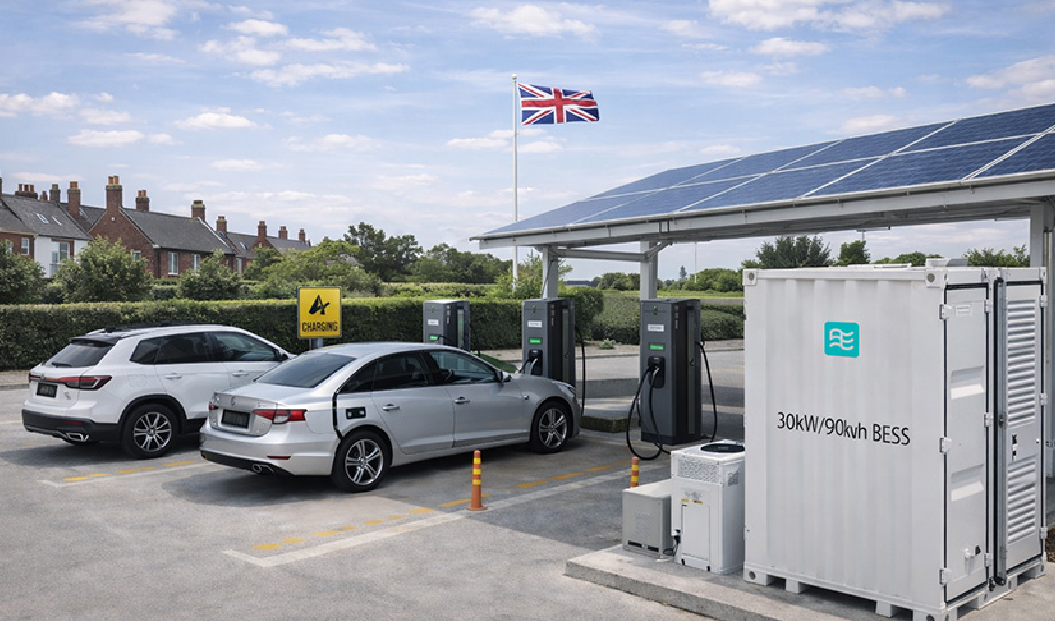
Grid instability and rising daytime demand push many medium‑size sites to pair PV arrays with battery banks. The practical problem: a 45kW three‑phase inverter must serve both PV and storage while keeping the site stable, safe and cheap to run. Engineers often look at larger, off‑grid options like a 60kW off-grid PV inverter when they fear overloads, but that doesn’t answer questions about thermal stress, fault clearing or compliance with local grid codes.
Diagnosing root causes
Start by separating user needs from system failure modes. Common drivers behind poor performance are:- Unmanaged charge/discharge profiles that shorten battery life.- Thermal hotspots in power electronics that cause early trips.- Insufficient anti‑islanding and protection coordination with utility relays.- Harmonic injections and phase imbalance that upset motors and sensitive loads.Pinpoint each cause with logging and staged stress tests rather than with guesswork.
Design choices that actually matter
Useful design choices are concrete and measurable:- Power stage: choose SiC MOSFETs or low‑loss IGBTs tuned for 45kW duty cycles to reduce switching losses.- Topology: a three‑phase full‑bridge with an LCL output filter gives stable grid interaction and small THD when tuned.- DC bus: use a modular capacitor bank so you can replace failed modules without long downtime.- Controls: implement separate PV MPPT and battery charge algorithms with a supervisory energy manager to prioritise battery state of charge and grid support.- Communications: native Modbus/IEEE 2030.5 or SunSpec support makes plant SCADA straightforward.Design around measurable specs: overload duration, expected cycles per day, ambient temperature range, and mean time between failures (MTBF) targets.
Protection and reliability: lessons from field use
High‑protection designs pay for themselves quickly. A field trial at a textile mill in Gazipur showed that switching from a basic inverter to a professionally hardened unit reduced unscheduled downtime during monsoon season. For three‑phase systems, protection features that earn their keep include:- Fast RMS‑based fault detection and selective tripping.- DC reverse‑current blocking and precharge circuits to protect PV strings.- Thermal derating profiles plus active cooling with local fault isolation.If you need an example of a rugged product family, consider a high‑protection 60 kW inverter as a benchmark for protection features and serviceability.
Common mistakes to avoid
Teams keep repeating the same errors. Avoid these:- Undersizing the cooling system for tropical climates.- Relying on a single communication channel for BMS and SCADA.- Skipping staged commissioning: PV-only, battery-only, and combined tests.- Treating harmonics as an afterthought—design the filter early.Stop guessing about lifetime; model cycle ageing and include replacement cost in the bill of materials.
Alternatives and trade‑offs
Compare approaches plainly:- Central 45kW inverter: fewer parts, simpler wiring, but single point of failure.- Parallel modular 15kW units: higher redundancy, easier spare swapping, but greater control complexity.- Oversizing to 60kW: gives headroom for transient loads but may reduce efficiency at typical load and increase initial cost.Choose the option that matches operational priorities: uptime, serviceability, or lowest capital outlay.
Practical checklist for deployment
Before you sign off on procurement, verify:- Thermal and electrical stress tests under site ambient conditions.- Coordinated protection study with utility relay settings.- BMS integration and fail‑safe charge limits.- On‑site spares and a written preventive maintenance schedule.- Training for local technicians on fault diagnosis and replacement procedures.These steps cut the chance of surprise trips and long repair waits.
Conclusion
Solve the real problems first: define expected duty, plan protection and cooling to match local conditions, and verify with staged testing. A thoughtful 45kW three‑phase design reduces wear on batteries, keeps power quality within limits, and makes maintenance predictable. For projects that need proven protection and clear service pathways, the practical outcomes you’ll get are reliability, clarity and predictable lifetime cost, the kind of results teams find when they work with trusted suppliers like WidenEdge.